I recently wrote an editorial on the 2001 World Trade Center attacks to
introduce an incoming special issue in Fire Technology. It has now been
published and can be read here (open access). I reproduce below an excerpt from it.
9/11 World Trade Center Attacks: Lessons in Fire Safety Engineering After the Collapse of the Towers
Every engineering discipline has been shaken by tragic events at some point. Ralph W. Emerson (1803–1882) wrote that “We learn geology the morning after the earthquake”. Humans tend to identify gaps of knowledge after a catastrophe. Over time, progress and modern societies have established the means to set up major independent investigations after a technological disaster strikes. Their objective is to unearth the causes and learn lessons from the event so that similar catastrophes are avoided in future. In order for this to happen, it is essential that the results of the investigations are widely disseminated and that the scientific community carefully analyses them, critically assesses them and further improves the conclusions and lessons. This special issue invites the fire safety engineering community to just do that with respect to the 9/11 attacks on the World Trade Center (WTC) in New York.
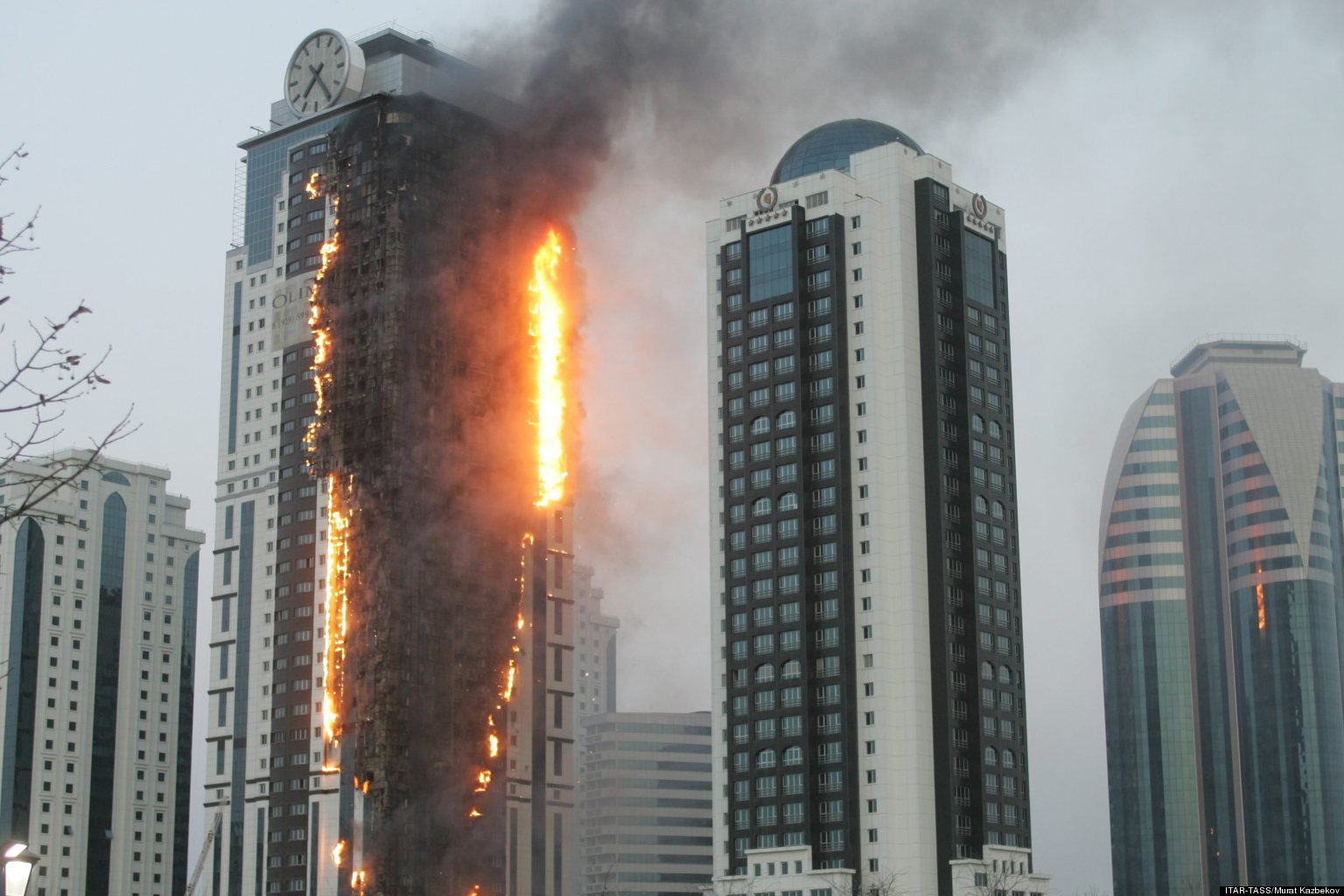
WTC towers 1, 2, 5 and 7 collapsed because of the fires triggered by the attacks. From causes to consequences, this disaster touched on a wide range of scientific disciplines. Understanding it thus requires a multidisciplinary approach, and its most important elements are covered in this special issue.
[...]
This is perhaps best illustrated by an example. In September 2011, 10 years after the attacks, the international magazine Scientific American published an article (“Castles in the Air”) on the WTC disaster’s effect on the design of new tall buildings. It concluded that high rise buildings needed to be kept away from aircrafts and should have means for prompt evacuation; it did not discuss protection from fire. However, WTC 1, 2, 5 and 7 collapsed because of the fires the attacks had triggered—they had resisted the aircraft impacts (WTC 5 and 7 were not even hit) and most of the occupants below the floors of impact were able to safely evacuate.
--
The full reference is:
G Rein, 9/11 World Trade Center
Attacks: Lessons in FireSafety Engineering After the Collapse of the Towers, Fire
Technology 2013 (in press). http://dx.doi.org/10.1007/s10694-013-0337-6.
The cause for the recent incident at the West Fertilizer site in Texas is under investigation
and remains unknown, but many parallels can be drawn from previous similar
events involving large quantities of inorganic fertilizers.
Aftermath of the mass explosion following a fire in West, Texas, April 17, 2013.
Photo by REUTERS, Mike Stone.
It is the ammonium nitrate (AN)
that poses the best known fire and explosion hazards in fertilizer storage sites,
especially of the NPK fertilizer type (nitrogen, phosphorous and potassium).
Some media outlets are speculating about exploding anhydrous ammonia tanks, but
that is a very rare event not ever observed before. Unfortunately, mass
fires and explosions in AN warehouse are not uncommon events (average
worldwide frequency is about one every three years). One example, in 2001 the
AN warehouse of a fertilizer plant in Toulouse, France, exploded resulting in
30 people dead and >2000 injured. The blast wave shattered windows up to 3
km away [source: wikipedia].
I am confident the Fire Service was aware that situation was
very difficult and probably had a special emergency plan to deal with this particular site. They attended the fire to comply with their duty in the face of extreme danger.
Their main priority would be to control the fire so it does not grow to the critical size when an explosion of AN could be triggered. The science behind a mass explosion
following a fire in AN plants is still in bare bones, we know so little, and cannot be predicted. So imagine how difficult it is to deal with the emergency.
The source of the hazard is the exothermic decomposition
of AN which begins around 200-230 ◦C. It has been suggested that it follows two reaction paths (the second is more exothermic):
NH4NO3→ N2O + 2 H2O
4 NH4NO3→ 3 N2 +2 NO2 +8 H2O
(a) Unreacted NPK fertilizer granules and (b) cross section showing partially reacted sample with 4 phases visible. Photos from Hadden and Rein 2007.
The fire could have been initiated by self-sustaining decomposition (SSD). This is the phenomenon in which the
temperature of a bed of AN-fertilizer rises due to spontaneous heat generation
until thermal runaway leads to a fire. The flames would have had then spread to other flammable materials in the plant, like supplies, fuel, packaging, offices or vehicles. SSD of fertilizers is promoted by
chemical compounds present in NPK and also the accidental contamination with organic materials. It can start at around 100 ◦C, which is a significantly lower temperatures than that required for pure AN decomposition.
A likely sequence of events is that an accidental heat source (e.g. hot work, hot
surface, small fire) starts a SSD reaction in a bed on AN-fertilizer which slowly grows
and leads to the fire that the Fire Service were battling. At some point, the flames grow
faster than expected and rapidly heat very large quantities of AN, which leads
to detonation (=explosion and blast caused by the very rapid decomposition of AN inside an enclosure).
A large detonation wave like this one devastates life and
structures over a wide area around the point of origin. Moreover, the burning fertilizer becomes airborne with the
explosion and lands further away igniting subsequent fires, as seen in the aftermath of this explosion.
Last Thursday, between my two lectures on M2 Heat Transfer and M4 Combustion, I was interviewed by Quentin Cooper for BBC Radio 4 Material World.
You can hear the programme in the BBC podcast (we start from 14 min). A very nice expert on petrology was also invited to talk, Tony
Milodowski, from the British Geological Survey.
Quentin was interested in learning about the science behind the recent news of a large fire in the coal mine of Daw Hill, the last remaining pit in Warwickshire, England. The first reports coming out say the initiating event was spontaneous ignition of coal. The fire developed quickly and a full evacuation of the mine was ordered. I was quick to mention that the longest continuously burning fire on Earth is The Burning Mountain in Australia, now a National Park, a coal seam that has been smouldering for more than 6,000 years. I always add at this point that at least the British cannot be flame for starting it.
Artistic illustration by E Burns 2008 of how I see that a smouldering coal fire could develop underground of a mine. The figure illustrate the spread of smouldering along the coalface and surface cracks of the seam, off gassing on the surfaces, subsidence and suppression attempts. I used this figure in the book chapter "Smoldering Combustion Phenomena and Coal Fires"
I talked about the phenomena of self-heating in a previous post after the biomass fire in Tilbury Power Plant. It refers to the tendency of certain materials, like biomass pellets and coal, to spontaneously heat up and smoulder starting from ambient temperatures. Self-heating can result in a spreading fire without intervention of any external ignition source. The topic is one of my fields of expertise. The problem can go undetected until the accident takes places.
NOTE: A substantial body of literature, not centered on combustion science, uses the term "spontaneous combustion" when referring to fires that started as self-heating. In rigorous terms, this is incorrect and misses the point of the key phenomena at play. The spontaneous process here is the heating that acts as ignition of a combustion reaction and leads to a fire; the combustion is not less spontaneous or fundamentally different than other smouldering or flaming phenomena.
Smouldering combustion in glowing coal embers, from Wikipedia.
The interview took place in the studios of the BBC, and one of the highlights of my day was to enjoy the stunning building that Broadcasting House is. It is pretty and smart from the outside (the inward curved entry, making a C shape, is marvelous) and comfortable and interesting in the inside (all transparent glass walls and soft lights). While touring the building a bit, I was lucky that one of the BBC Radio 4 staff members mentioned she was choosing the photo illustrating this interview for the podcast website, and I immediately offered my advise. I recommended they use the photo illustrating the term "smoulder" in Wikipedia, a page that I started back in 2006. This photo is superb! and they took my advise.
While high-rise designers make sure that gravity, winds, quakes and fires do not take their ever complex structures to catastrophic collapse, researchers study structural mechanics, aerodynamics, seismology and fire dynamics so that engineering calculations continuously improve and contribute to safer and safer infrastructure. I had the professional pleasure of being involved in this context first hand, and see some of my fire research work be embodied into real buildings [1].
Cast in the PhD theses of Dr Jamie Stern-Gottfried ([2], now at Arup Berlin) and Dr Angus Law ([3], now at Arup Leeds), I led the research team that pioneered the thermodynamics concept of travelling fires for structural engineering. This concept has already impacted on the way industry designs modern infrastructure. Funded by Arup, the work has been applied to a building in the City of London in 2012 even before publication of the latest journal papers [1, 4]. More buildings in London, Cardiff and Manchester have followed. This represents one of the fastest knowledge transfer from research to industry seen in the field.
The idea started when we realized that the current structural design for fire protection is not well suited for 21st Century architecture. Traditional methods for specifying the fire load to the structure assume uniform burning and homogeneous temperature conditions throughout a compartment, regardless of its size. This is in contrast to the observation that accidental fires in large, open-plan compartments tend to travel across floor plates, burning over a limited area at any one time and do not burn simultaneously throughout the whole enclosure. These fires have been labelled travelling fires [1, 4]. Despite these observations, traditional structural fire design methods do not account for this type of fire. Traditional methods are only valid for small enclosures, like those typical of older architecture (eg, apartment blocks vs. modern office space or modern airport lounges).
We used travelling fires to produce more realistic fire scenarios in large, open-plan compartments than the conventional methods. This has been published widely [1-6]. The methodology that we developed is purposely simple but based on actual fire physics. It is also posed in a manner that is compatible to the way structural engineers prefer to think about fire loads and design. It considers a family of fires that includes the full range of physically possible fire sizes, from very small to very large. Traditional methods consider only one fire, two at most, and always of the largest size possible. Small fires spread slowly, large fires spread fast, and fires that occupy the whole compartment area do not spread, they simply burn in place. With this framework in mind, we then split the thermal environment into two regions: the near field (the flames) and the far field (smoke away from the flames). Both fields move along the compartment as the fire spreads. See Figure 2.
Fig. 2. (a) Illustration of a travelling fire and (b)
Near field and far field exposure durations at an arbitrary point within
the fire compartment. From [1].
Small fires travel across a floor plate for long periods of time (slow spread)
with relatively cool far field temperatures, while large fires
have hotter far field temperatures but burn for shorter durations
(faster spread).
Heat transfer calculations show how much the concrete and the steel members heat up due to different fires. As structural members heat up, they lose strength and induce deformations thus posing a collapse hazard to the building. The higher the temperature the larger the hazard. We found that travelling fires lead to the highest temperatures and have a larger impact on the performance of both concrete and steel structures. They are the most onerous fire scenario to the stability of the building. Thus, in the course of this research, we learnt that conventional design approaches cannot be assumed to be conservative. The results indicate that the worst case scenario would be a medium sized travelling fire between 10% and 25% of the floor area. See Figure 3.
Fig. 3. (a) Gas phase and concrete temperatures for rebar
depths of 20, 30, 42 and 50 mm and (b) Peak bay temperature vs. fire
area and rebar depth. From [1].
The work [1 to 6] represents the foundation for using this concept for structural analysis and design. The results show that the impact of travelling fires is critical for understanding true structural response to fire in modern, open-plan buildings. See Figure 4. We recommend that travelling fires be considered widely for structural design and the structural mechanics. The four recent buildings mentioned above are the very first structures designed purposely to withstand the thermal load of a travelling fire.
Fig. 4. Comparison of concrete temperatures calculated
using the travelling fires (base case) and three traditional methods (standard fire curve, and two Eurocode curves).
The work is continued as part of the EPSRC project "Real Fires for the Safe Design of Tall Buildings" [7] led by Prof Torero and which counts with substantial support from industry (AXA, Arup, BRE, BuroHappold, FM Global, SOM). This project aims to produce data on large-scale fire behavior and remove the main barrier to progress in travelling fires; (as noted in [1]) "incorporating travelling fires into design is challenged by the lack of large scale test data".
Note: One of the first journal papers we published on the topic [5] received the 2011 Lloyd’s Science of Risk Prize in Technology. You can read this past article in the blog here.
I am delighted to announce that I have been made Editor-in-Chief of Fire Technology. I take the stead from Jack Watts who expertly led the journal since the 1980s.
Fire Technology is an academic journal publishing scientific research dealing with the full range of fire hazards facing humans and the environment. It publishes original contributions, both theoretical or experimental, that provide and advocate for research and education in fire safety engineering. It is published by Springer in conjunction with the National Fire Protection Association (NFPA).
I see Fire Technology as a small journal in terms of citation impact (~0.43 in 2012) but a very large venue in terms of audience. It is probably the most read journal in the field of fire science, especially by industry. I would like to use FT to push fire science into technology; it is and should continue being The applied journal in the field.
My first step is to renew the Editorial Review Board and choose the best Associate Editors. My editorial line is to expand into emerging fire science topics (wildland fires, WUI, fire and structures, renewable energies, energy storage, etc), make the journal even more exciting, capture the best applied and novel research pieces and reward the reviewers. The immediate objective is to increase its scientific impact (~ impact factor) while maintaining its large industry readership.
Below I reproduce the content of my first editorial as Editor-in-Chief, Jan 2013.
---- Editorial: Knowing is Not Enough, We Must Apply http://dx.doi.org/10.1007/s10694-012-0318-1
by Guillermo Rein, Department of Mechanical Engineering, Imperial College,
London, UK
Jack Watts has superbly led this journal for several decades, and it is an honour
for me to follow his steps and take the stead. My hope is to do nearly as well as
he has done. With his help, the support of the Associate Editors, the Editorial
Board, Springer staff and especially with the collective efforts of countless reviewers, I look forward a journal that provides and advocates for research and education in fire safety engineering.
Whether science precedes technology or as often observed the inverse order is
found, the two of them must communicate and feed to each other if we are to
reduce the worldwide burden of fire hazards. This journal wants to bridge the
gap. Fire Technology will continue pushing forward the frontiers of knowledge
and technology, and help reduce the unworthy obstructions to progress in fire prevention and public safety.
I would like to finish with the wise words of the German writer Goethe (1749–
1832), who said ‘‘Knowing is not enough, we must apply. Willing is not enough,
we must do’’.
While investigating the limitations of the theory that explains the ignition behavior of a polymer, we discovered something unexpected, a new natural flame retardancy mechanism.
In the UK, a fire is started every 3 min, and over the course of a year, the cost of fire totals approximately £7 billion [1]. It is a major threat, and continues to be the leading cause of property damage worldwide according to the insurance company FM Global. In the modern world, polymer materials are ubiquitous because of its technological, manufacturing and commercial advantages. But they also fuel flames, and are a prime actor in accidental fires. Better understanding of how polymers burn is a necessity if we are to save human lives, protect infrastructure and the environment, and improve businesses.
Ignition is a key process in the initiation and growth of fires. The risk of fire is associated to the ease of igniting the materials present. This is true for the initiating event but also for the subsequent spread. For example, the flames and the hot smoke transfer heat to nearby fuels, igniting these too, thus leading to further growth of the fire.
Pyrolysis is the thermochemical process by which a solid (or liquid) decomposes and produces the gaseous fuels that feed a flame. When a solid fuel is heated it eventually reaches a temperature threshold where it begins to break down chemically (typically around 200 to 300 C). Pyrolysis is similar to gasification but with two key differences, a) pyrolysis is the simultaneous change of chemical composition (e.g. long hydrocarbon chains to shorter chains) and physical phase (i.e. solid or liquid to vapour), and b) is irreversible. It is an endothermic reaction, meaning that it needs an external supply of heat to continue because the products carry more chemical energy than the original fuel. It does not involve oxidation reactions.
Watch this accelerated video to see the pyrolysis of a block of PMMA, a synthetic polymer used in plexiglass, when it is exposed to a strong source of radiant heat (arriving from the top).
Since World War II, laboratory experiments performed with radiation heat sources have provided a basic understanding of ignition. It has led to what is called the classical ignition theory. This theory allows to calculate the time it takes to ignite a solid fuel when it is exposed to heat. It was developed from experiments conducted at low levels of heat (in the range below ~70 kW/m2). The theory says that the time to ignition decreases with the square root of the incident heat. These calculations have been used extensively in fire science and in fire protection engineering for decades. Although the expression has been altered slightly many times as research developed, it has kept pretty much the same mathematical form (=inverse square root for all heat flux levels).
But in 2006, researches at Worcester Polytechnic Institute conducted experiments at high heat fluxes, up to 200 kW/m2 on a range of polymers (PMMA and wood, for example). Their experimental data could not be predicted correctly by the classical theory. The error at high heat levels was large. Instead of the expected continuous square root behavior, the measurements were diverging from theory with a gradual flattening towards a constant ignition time for heat levels above ~80 kW/m2. The researchers could not explain the phenomena but reported their measurements [2]. This data posed a challenge to the scientific community.
This is an important failure because in large accidental fires, most of the radiative heat arriving to nearby fuel items is above 100 kW/m2. Thus, if this error is not corrected, predictions of the pattern and the rate of spread of a fire will be erroneous. Also, this failure of the ignition theory marks a limitation of our understanding and hinders the development of new fire protection technologies.
Measurements of the time to ignition of PMMA samples found in the scientific literature. The cloud represents experimental uncertainty. Top: Inverse of the square root of the delay time to ignition vs.
heat flux (inset: zoom for heat fluxes up to 60 kW/m2); Bottom: Delay
time to ignition vs. heat flux. Figure from [3].
So, in 2008 we picked up the challenge and tried to solve this riddle. We conducted a detailed investigation [3] of all the experimental data in the literature for the polymer best studied in fire science: PMMA. Data extended from low to high heat levels, see figure above. We then used a comprehensive numerical model of pyrolysis to revise all the assumptions cast in the classical ignition theory. We interrogated the experimental data using the numerical model to tell us why the failure. We wanted to identify the assumption and the mechanism (or mechanisms) responsible for the unexpected failure at high heat levels. All possible physical and chemical assumptions were systematically studied, one-by-one and combining them. We found it at the end. The classical ignition theory makes a wrong assumption and misses an important mechanism, a physical one, related to radiation heat transfer (and related to optics as well).
The problem is that the classical ignition theory assumes that the radiation is absorbed at the exposed surface of the material. We found that this is a good approximation to all materials at low heat levels, but it is not a valid assumption for many materials at high heat levels [3]. The
assumption breaks down at high heat, with PMMA for example, because this material is translucent to some radiation. We could correct the ignition theory by taking into account that a fraction of the radiation
penetrates directly in-depth, into the material, such that the surface heats up less. This leads to slower ignition and slower fires. The elusive mechanism is called in-depth radiation absorption.
This discovery was also reached simultaneously and independently by researchers at FM Global [4], although using an analytical approach and a smaller experimental data set. We learn about FM Global's work after presenting our findings at an international conference (BCC 2009 Recent Advances in Flame Retardancy of Polymeric Materials), so we were lucky to be able to cite them too and include their data in our final version published in 2010 [3].
The discovery is important because many polymers are known to
exhibit some degree of transparency to radiation. PMMA is just one example, the example for which most fire data exists. Due to in-depth absorption, a material delays ignition because heat reaches directly deep into it thus leading to lower temperatures at the surface and hence taking longer to reach ignition. The work shows that in-depth radiative abortion acts as a natural fire retardant in polymers; it helps to 'cool down' the surface when heated.
This mechanism could be exploited by the plastic industry to design new polymer formulations that favor materials that are transparent to radiant heat and absorb less at the surface but more in-depth.
It might help to formulate physical flame retardancy, whereas currently the plastic industry relies mostly on chemical retardants.
References:
[1] An Introduction to Fire Dynamics, 3rd Edition, 2011, by Dougal Drysdal, Wiley.
[2] Flammability characteristics at applied heat flux levels up to 200 kW/m2, by P Beaulieu and N Dembsey in Fire and Materials, 32(2), pp. 61-86, 2007
I had a skype teleconference with Oriol Rios last week.
Oriol is a bright MSc student at Ghent University to whom I had the pleasure to teach fire dynamics last year. He did great in my course.
He was telling me how much he is enjoying a massive online course on 'Writing in the Sciences'. This is an open and free registration course to "train scientists to become more effective, efficient, and confident writers" taught by Prof Sainani at Stanford University. I immediately agreed with the objectives of the course and praised Oriol's initiative. Hope more scientists would be taking it. Indeed, I will be taking the course myself soon, and will be strongly suggesting it to my students and postdoc. We can only improve science by learning to write better.
A bonus to our conversation was Oriol's first homework in the course, which involved writing a short summary of a 'hot paper' in each students' field of expertise. He chose one of my papers (nice!). The text is below. I was honored by his summary and understanding of what we attempted to do.
--- A hot paper in a hot science field; Fire Safety
by Oriol Rios
Thinking about “hot papers” in the fire science field is inherently funny; the scientific approach to fire safety is a “hot field” –it's main journal was first published in 1977- and so is the object of study. "Forecasting fire growth using an inverse zone modelling approach" (W. Jahn , G. Rein, J.L. Torero, 2011) stands out due to its innovative and revolutionary approach to forecast building fire dynamics.
Jahn et al. explore and validate a novel forecasting technique based on data assimilation and inverse modelling. Sensor observations of an enclosure fire (e.g. fire in a bedroom) are gathered during an interval of time (assimilation windows) to estimate the invariant parameters using an inverse modelling approach; evaluating the parameters involved in an equation knowing the result in advance. These values are inputs for a two zone model -a simple model that just considers a hot upper layer of smoke and a cold lower layer of fresh air- that finally forecast the temperature of the upper layer, the heat released rate, and the smoke layer height. The forecast is delivered with positive lead time, that is before the predicted event takes place. The method was validated using a Computational Fluid Dynamic (CFD) program to prove that 30s of observation leads to a successful 100s forecast.
The ultimate aim of this new technique is to assist emergency response -particularly fire fighters crews- by giving them a schematic description of the situation and the expected fire development before they enter the scene. This paper stands out as important because it is the first to provide a method of delivering a reliable forecast with positive lead time.
Although the envisioned tool is still far from operational and more research must be conducted regarding complex fires, the authors suggest that the necessary data to run the model could be obtained just by tweaking the sensors that are already present in many new buildings -smoke detectors, temperature sensors and so on. This provides a powerful tool with a simple set up and low computational cost; A keystone of future fire safety engineering.
Note by G Rein: A minor comment is that the paper uses CFD simulations as sensor data, not for validation.
Today was my last day at the University of Edinburgh. I left my office this afternoon. I look forward continue collaborations with Edinburgh. It has been a
real pleasure and privilege to work there since 2006. I now move to
Imperial to continue the growth of the Edinburgh school of thought.
In my Edinburgh office in 2007
My former office in Edinburgh, on the day I left. Empty!
With my arrival to London, a new fire research group is created: the Imperial Haze Lab. It starts small, with one PhD student (plus four IMFSE students). We expect to gather pace and size in the coming years with topics of research on fire dynamics and reactive solids, in both the built or natural environments. Some examples of planned research are forecasting fire dynamic (applications both to buildings and to wildland), pyrolysis modelling, travelling fires for structural design, fire threats to renewable energies, smouldering wildfires (the largest fires on Earth) and carbon sequestration in char.
Smouldering is the slow, low-temperature, flameless burning that represent the most persistent type of combustion phenomena and which leads to the largest and longest burning fires on Earth. Smouldering megafires in peat and coal deposits occur with some frequency during the dry season or eventual droughts in, for example, North America, Siberia, the British Isles, the subartic and South-East Asia.
In this work, we use an experimental methodology to study the smouldering combustion of samples of peat under a wide range burning conditions. By varying the oxygen concentration and the ignition conditions we investigate the competing pyrolysis and oxidation reactions.
We focused on the three main solid species involved in smouldering fires: peat, char and ash . It shows clearly how pyrolysis concentrates carbon in the char while a large fraction of the hydrogen is released, while the oxidation releases most of the carbon and concentrated the minerals in the ash which H, C and N contents are negligible. The fraction of carbon in char is ~1.5 times higher than in peat, and ~35 times higher than in ash. The change is even greater in terms of carbon density, it increases from 77 kg-C/m^3 in the peat to 133 kg-C/m^3 in the char, to then sharply drop to 0.7 kg-C/m^3 in ash.
The experiments clearly show that there are pyrolysis and oxidation reactions. Char is formed by pyrolysis and consumed by oxidation. So at the beginning of a test there is no char, and at the end only a small amount of char remains, but in between substantial amounts of char (~50% of initial weight) were momentarily formed. Smouldering produces and consumes its own char: it initially produces char through pyrolysis before being consumed by char oxidation reactions. The competing nature of the production and consumption char reactions has been experimentally shown (see figure below).
Evolution of peat and char fractions through an experiment.
The virgin peat reacts during the first 15 min to produce char and ash. Thereafter, only char reactions take place producing ash.
Tracking the amounts of peat and char at any given time shows that first char is formed. It reaches a maximum fraction (~50% of the initial mass) in 20 min and then slowly the char is consumed down to ash (10% mass). At the end of the experiment, 90% of the initial mass has been released as gases, leaving a void and a thin layer of ash.
By varying the oxygen concentration and the thermal conditions we investigate the competing pyrolysis and oxidation reactions at a fundamental combustion level. The figure below shows infrared images of the surface of samples at different oxygen levels (21% is normal air) during the early burning stages of ignition (5 min after first heat exposure). As the oxygen level is increased, the temperature of the sample surface increases (indicated by brighter colour) showing that although pyrolysis dominates in this early stages of spread, oxidation reactions also play a role.
Infrared images of the sample at [O2] of 17%, 21%, 25% and 35%just 5 min after first heat exposure.
The results presented here can be used to advance our fundamental knowledge of large-scale smouldering wildfires which are currently not well understood.
--
Title: "Study of the competing chemical reactions in the initiation and spread of smouldering combustion in peat"
By: Hadden, Rein and Belcher
In: Proceedings of the Combustion Institute (in press), 2012.
http://dx.doi.org/10.1016/j.proci.2012.05.060
I am delighted to announce that my two PhD students Freddy Jervis and Nicolas Bal have recently defended their theses successfully and are now Doctors of Philosophy in Engineering from the University of Edinburgh. Congratulations. See below the announcements circulated.
Dr Bal. Email sent by Dr Welch on 21/08/2012
-----
Dear all,
It is my pleasure to inform you that Nico Bal has successfully defended his PhD thesis in the viva exam today, subject to minor editorial corrections.
His studies were sponsored by the BRE Trust and supervised by Guillermo Rein, the thesis title was:
The external examiner was Chris Lautenberger, Principal Engineer, Reax Engineering (Berkeley, USA); Tim Stratford chaired the exam committee and I was again the internal (fourth time for Guillermo's students!).
By the end of the viva Nico had filled the white board with equations and graphs and we were in no doubt that there is a lot of both uncertainty and complexity in pyrolysis modelling. But out of this complexity Nico has established significant new insights, a great achievement and a platform for lots more interesting work in the field.
Many congratulations to Nico!
Stephen ---
Dr Jervis. Email sent by Dr Welch on 02/07/2012
-----
Dear all,
It is my pleasure to inform you that Freddy Jervis has successfully defended his PhD thesis in the viva exam today, subject to minor editorial corrections. His studies were supervised by Guillermo Rein and the thesis title was:
The external examiner was Prof. Xavier Viegas, forest fires expert from Coimbra University (Portugal)*; I was the internal.
Freddy did an amazing job investigating the intricacies of pine needles combustion using the Fire Propagation Apparatus, with extension to assessment of the effects of leaf morphology on flammability (which has implications for historical changes in fire activity arising from climate-driven floral changes!). At the other extreme his study also looked at the impacts of oxygen and heat flux on burning of chipboard, of relevance to fires in buildings.
Well done Freddy!
Stephen ---
Imagine a technology able to forecast fires. It would lead to a paradigm shift in the response to emergencies and provide the Fire Services with essential information about the ongoing blaze with some lead time (i.e. seconds or minutes ahead of the event). It would also allow for the future of infrastructure protection to be implemented in smart buildings.
316 s after ignition. could this be forecasted ahead of time? [Rein 2012]
But despite advances in the understanding of fire dynamics over the past
decades and
despite the advances in computational capacity, our ability to predict
the behaviour of fires in general and building fires in particular
remains very limited. The state-of-the-art of computational fire dynamics is not fast or accurate enough to provide valid forecasts on time...
Paleofuture: forecast made in 1900 of the fire-fighting in the year 2000.
By Villemard, 1910, National Library of France
But we found a way to solve this problem. In a recently finished PhD thesis and set of published papers, we show the technology is possible. We propose to use sensor measurements of the ongoing fire to steer and accelerate computer simulations. This takes advantage of the concept of data assimilation (similar to what meteorologists do to forecast the weather).
Our method consists on combining a simplified spread mechanism with a fire model, and use sensor data to find the fire parameters that dominate the spread. This way, the model automatically recovers information lost by
approximations in the physics, chemistry and the maths.
Concept of data assimilation and the sensor steering of model predictions [Cowlard et al 2010]
A series of compartment fire cases haven been studied this way, and we investigated two different fire models. First a simple two-zone model, and then a state-of-the-art computational fluid dynamics (CFD) model.
For the simple two-zone forecast model, the firepower and the growth rate were estimated correctly up to 30 s ahead of the event: the model was faster than the fire. This was the very first time a fire forecast technology was demonstrated and the first time positive lead times were reached. The results show that the simple model is able to deliver fast and useful information about the ongoing fire thanks to the sensor data. This initial work demonstrated that the new methodology is effective, and allowed us to move to the next level of complexity.
Computational domain of the fire
compartment [Jahn et al 2012]
For the CFD forecast model, we use a coarse grid that provides short computation times. Spatially resolved forecasts were obtained in reasonable time. It is even possible to
estimate the growth
rates of several different spreading fires simultaneously. Although actual positive lead times were not reached here with CFD, it is shown that the use of relatively coarse grid size in the forward model significantly accelerates the assimilation (up to 100 times faster) without loss of forecast accuracy. Actual positive lead times with CFD are possible by reducing the computational time by at least another order of magnitude in the near future using high performance computing techniques.
Dalmarnock Fire Test One conducted on July 25th.
Our latest bit on the topic was a test case using the measurement data from a real fire. We forecasted in near real time the Dalmarnock Test One, conducted in 2006 inside the 3.5 x 4.7 x 2.4 m living room in a high rise building in the city of Glasgow. It was possible to find a good fit between the observations and the forecast using CFD.
The results are a fundamental step towards the development of forecast technologies able to lead the fire emergency response. The work opens the door to forecasting fire dynamics, but it is an on-going research topic.
We are happy that the work has been featured in the media and people is being exposed to this novel idea:
Interview for Scottish TV News (go to minute 19 here). Aired on 29 Nov 2010.
Our research resources on the topic (in reverse chronological order):
1) Jahn, Rein and Torero (2012), Forecasting fire dynamics using inverse
Computational Fluid Dynamics and Tangent Linearisation, Advances in
Engineering Software 47 (1), pp. 114-126. doi:10.1016/j.advengsoft.2011.12.005
3) Jahn, Rein and Torero (2011), Forecasting Fire Growth using an Inverse CFD Modelling Approach in a Real-Scale Fire Test, Fire Safety Science 10, pp 1349-1358, doi:10.3801/IAFSS.FSS.10-1349
4) Jahn, Rein and Torero (2011), Forecasting Fire Growth using an Inverse Zone Modelling Approach, Fire Safety Journal 46, pp. 81–88. doi:10.1016/j.firesaf.2010.10.001. Paper shortlisted for 2010 Lloyd's Science of Risk Prize.