Showing posts with label climate. Show all posts

Thursday, 3 December 2015

Tackling the haze in South-East Asia: a call to COP21 Paris

Reprint of my original article published first in the blog of The Grantham Institute.

Peat fires are raging in Indonesia and their extent is staggering. The dry season is not over and NASA satellites have already counted more than 12,000 active fires, which have emitted in excess of 1.6 Gton of carbon dioxide equivalent. This is more than Japan’s annual emissions and close to the footprint of the whole of India. In fact, if peat fire emissions were considered, Indonesia would be the 4th highest emitting country in the world. With COP21 climate negotiations on carbon emissions due to start in just over a week, this widespread haze is choking the population and fauna.

Driven by energy goals and climate change, international efforts are moving towards reducing anthropogenic greenhouse gas emissions and limiting the burning of fossil fuels. However, by ignoring smouldering fires, a major source of greenhouse gases is being overlooked.

The long slow burn

Smouldering fire is a natural phenomenon that burns Earth’s organic-rich deposits, primarily peatlands, soils and coal. Sometimes termed smouldering megafires, these are the largest and longest burning fires on Earth and take place not only in Indonesia, but also in Siberia, Alaska, Florida and Australia to name a few.

Peat megafires destroy essential peatland ecosystems, and release huge quantities of carbon dioxide, carbon monoxide and methane, making up 15% of annual global greenhouse gas emissions. This is the same amount attributed to the whole of the European Union, or all the vehicles worldwide – and yet it is not accounted for in global carbon budgets.

Moreover, the burning of deep peat affects older soil carbon that has not been part of the active carbon cycle for centuries to millennia, and thus creates a positive feedback to the climate system (see Figure 1).
Figure 1. The peat fire problem at the Earth scale, including climate feedback. By G Rein, CC BY 3.0 license

Why so large?

Smouldering combustion is the slow, low temperature, flameless burning of porous fuels. It is sustained by the heat released when oxygen directly oxidises the carbon on the surface of organic soil particles. Once ignited, subsurface organic layers such as those in peatlands or carbon-rich soils burn slowly for long periods of time, spreading deep into the ground and over extensive areas.

Possible ignition events can be natural (e.g. lightning, self-heating, volcanic eruption) or anthropogenic (land management, accidental ignition, arson). Smouldering fires can be initiated by weak sources of ignition and are typically the most difficult to extinguish. Smouldering suppression requires much larger amounts of water than extinguishing flaming fires (it requires actual flooding of the land).

Easy ignition and difficult suppression make smouldering fire the most persistent type of combustion phenomenon on Earth. These fires burn for very long periods of time, lasting months, years, or even decades, despite extensive rains, weather changes and fire-fighting attempts. Peat fires have been active in Indonesia this season for the last more six months or more. They have become endemic in some areas of the world.


Figure 2. Visual and overlaid infrared imaging of radial smouldering spread over a sample of peat ignited at the centre. Photo by Rackauskaite, Huang and Rein (CC BY 3.0 license) http://blogs.egu.eu/divisions/sss/2014/10/01/soils-at-imaggeo-fire-watch-constellation


The Triple Challenge

Given the scale of the problem, relatively little action is being taken. I have identified three major challenges hampering global action:

Challenge #1 – Scientific understanding is poor: There are still large gaps in our knowledge of how smouldering fires ignite, spread or extinguish, which impedes the development of any successful mitigation strategy. Poor scientific knowledge on smouldering even leads to fatal misunderstandings and confusion between flaming and smouldering combustion.

Challenge #2 – Non-existent mitigation technologies: Smouldering megafires are routinely fought across the globe with techniques that were developed for flaming fires. These techniques are ineffective for smouldering fires because the heat transfer and the chemistry involved are completely different. For instance, aerial tankers do nothing to stop smouldering fires because flooding is required instead, and satellite monitoring substantially underestimates the size of peat fires because smouldering can spread underground.

Challenge #3- Topic fragmented among scientific disciplines: Smouldering megafires are an intrinsically multidisciplinary theme requiring collaboration by combustion scientists, ecologists, atmosphere scientists and biochemists.

These three challenges must be overcome before effective mitigation strategies can be implemented. While the largest fires on Earth continue releasing naturally stored carbon into the atmosphere, we are failing to protect both people and the planet.

A Call to Paris

We can reduce the worldwide burden of smouldering megafires and create new technology drivers by pursuing greater experimental understanding and up-scaling our research in the field.

Science is an essential enabler of understanding of peat fires. By strengthening the importance of fundamental knowledge and by consolidating the disciplines interested in the phenomenon, I believe combustion science will serve as the basis for tackling wildfires.

COP21 in Paris has the chance to mobilise the resources needed to advance the science that can lead the way and pioneer technologies against this Earth-scale but unconventional source of emissions.

Further Reading

Tuesday, 8 April 2014

G3E4O Geoengineering and the Engineers of Gaia

Earthrise seen by the Apollo 8 crew, 1968. Credit: NASA
Blog by Nils Roenner and Guillermo Rein, Department of Mechanical Engineering at Imperial College London.


Because of global concerns on climate change, engineers are called to have a leading role in tackling the problem, and a new discipline is being proposed: Geoengineering (G3E4O(IN)2R).
The realisation that man has an impact on Earth has led to the idea of the Anthropocene which signifies the current geological epoch, ‘the recent age of man’. Humans are being viewed as a factor and intricate part of nature. This is in agreement with Dr Lovelock’s Gaia hypothesis, introduced in 1979, a revolutionary view of the Earth not as a simple accumulation of systems but as one self-regulating system encompassing everything, including life.
Sketch of the Earth as system of systems with interdependencies and feedback lines outlined. Adopted from Rial et al. 2004 (10.1023/B:CLIM.0000037493.89489.3f).
In an article we wrote in 2013, The Engineers of Gaia, by using the concept of Gaia and the Anthropocene as starting points, we argue that the control system view of Earth is a vital part of geoengineering. It is not about one mechanism, it is about the self-regulating system as a whole. But if geoengineering was to apply a forcing too large or at the wrong place, such that positive feedback loops overtake, the results could be drastic and unpredictable. Careful and robust control is required when engineering something as vital as the system Earth, and this argument is often invoked to stop geoengineering proposals. Paraphrasing Prof Henry Petroski, for us, the premise would be that geoengineers welcome all the relevant science they can muster, but cannot wait for complete scientific understanding before acting to save life or create a new planet-saving technology. We also maintain that up until the moment when adequate understanding and models of the system are found only reversible and well controlled geoengineering interventions should be applied on a large scale, in order to prevent uncontrollable feedback being set off or reaching tipping points by accident.

The term geoeneering has only recently gained traction in the public debate, and its definition still varies according to the source. We think this can be defined as the large-scale anthropogenic intervention into the system Earth in order to adjust planetary mass and heat transfer processes, such that global catastrophes can be mitigated. Geoengineering opens up a broad range of measures with which global climate change can be tackled. No geoengineering approach should be viewed as a single solution to all of the problems associated with climate change. Most likely a combination of approaches will yield long term success. 

Our article briefly evaluates four promising applications of geoengineering using a set of criteria by which geoengineering proposals can be evaluated in term of feasibility, effectiveness, safety, geointervention, and costs.  These are summarized here:

Carbon Capture and Storage is a good option for rich countries aiming at reducing its CO2 emissions from power plants. Apart from its high cost, this method is very feasible and effective with low levels of geointervention and risks.

Biomass Burial is a good option for countries that have suitable and extended land. It is a lower cost approach and can be scaled up to have a larger impact. Low cost, feasibility, effectiveness and low levels of geointervention speak in favour despite some risks, like fire, which need to be managed.

Iron Fertilisation of oceans is an option for countries with coastal access. The low cost involved and the proven feasibility make this method appealing. But concerns about low effectiveness, high level of geointervention and high risks question the validity of the approach.

Cool Roofing of Building is a good approach for densely populated areas or countries with high annual level of sunshine. The low cost, risks and level of geointervention of this feasible option are attractive but on the other hand, it has a weak effectiveness and cannot control secondary effects.

Illustration of the strengths and weaknesses of the proposals under study.
It can be said for all geoengineering proposals, that due to our incomplete understanding of all feedback and threshold points in the global system of the Earth, the topic has to be approached with great caution. But its potential in helping to solve the great problem of climate change, make the efforts put into research and experiments worthwhile.


Tuesday, 2 July 2013

Keynote: When the soil burns to ash, and smouldering episodes of haze


I gave this morning the first keynote lecture at the 4th International Meeting of Fire Effects on Soil Properties, in the pretty and small city of Vilnius. The title was "Fate of Organic Matter and Pyrogenic Char in Smouldering Fires: when soils burn to ash". I have posted a copy of my slides below.

I started by making a direct reference to the ongoing haze episode in South East Asia, caused by smouldering peat megafires. Like most organic soils, peat is flammable, and dry peat is extremely flammable. This haze episode is expected to last one or two more months, and is leading to a respiratory health crisis and hundreds of millions in economic losses in the region. I then did a quick overview of some smouldering fires as a way of illustrating different fire phenomena  (1997 Indonesia, 2006 Scotland, 2008 North Carolina). After an overview of what smouldering combustion is, I then made a case for these fires to be considered the largest on Earth (the most persistent and longest leading to the highest consumption of fuel). I  reviewed the chemistry of peat fires and some of the laboratory work we have conducted to study their horizontal and vertical spread, and the role of moisture content. The last bit is collaboration with soil chemists on the signature left by smouldering fire for paleoenviromental reconstructions of peat core. I concluded with my global views; that smouldering poses a possitive feedback loop for climate change in the Earth system, and that there is a acute need for more research on the topic.


The lecture was well received with plenty of good questions during the session and the coffee break. In particular I got this question from an American scientists of what would be the best conditions for the production of charcoal/char; it really inspired me and gave me an idea for an experimental and modelling research paper: what is the heat pulse (peak and duration) that leads to the largest production of i) charcoal and ii) char. My guess is that charcoal is maximized by a strong but short pulse (akin to a quick flaming front) whereas char is maximized by the quenching of a propagating smouldering front. 


NOTE: The difference between charcoal and char is that the former, we call it alpha-char, is produced at lower temperatures such that the shape of the original biomass can be identified, and the former, we call it beta-char, is produced at higher temperatures and the shape of the original biomass cannot be identified.

Wednesday, 25 July 2012

Interview on the accidental burning of ancient carbon

I have been interviewed for GeoLog, the blog of the European Geoscience Union (EGU):

Geotalk: Dr Guillermo Rein


It  features my research on smouldering combustion, the largest fires on Earth and the accidental burning of ancient carbon. It is released as the first interview in the new monthly blog column called Geotalk, featuring short interviews with scientists about their research.

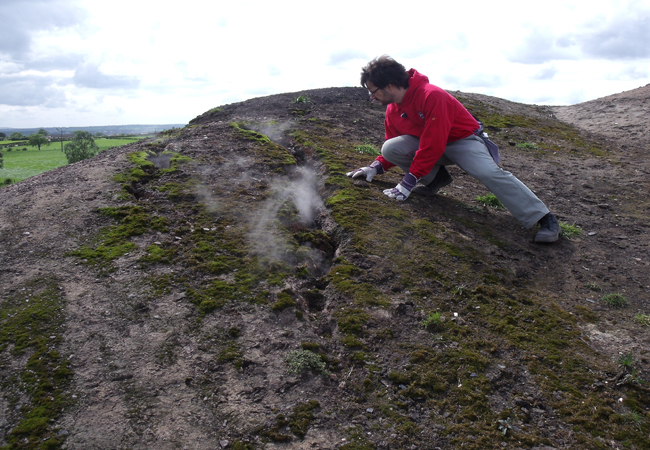
Dr Rein next to a water vapour vent on top of the 30m-high Bogside bing, near Glasgow, Scotland. This bing is a man-made hill of mining waste, and started to smoulder in 2009, approximately 80 years after the closure of the pit. The spread of the combustion is accompanied by the development of vents ahead of the front. (Image by Dr Ricky Carvel and Dr Guillermo Rein, distributed under a CC BY-SA Creative Commons licence)

Thursday, 5 July 2012

Geoengineering and Burt Rutan - The Economist

Letter to the Editor of The Economist sent on 6 of June 2012.

----


Dear Sir,

SpaceShipOne (designed by Mr Rutan)
at the National Air and Space Museum, Washington D.C.
Photo from wikipedia.
In your last Brain Scan article ("A maverick in flight", Technology Quarterly, June 2012) on the accomplishments of Burt Rutan, a pioneering and unconventional aerospace engineer, I find entertaining how Mr Rutan uses acrobatics to announce that global warming will lead environmentalists into an engineering breakthrough. He refers to unprecedented global warming and the tipping point for atmospheric carbon dioxide as "it’s just nonsense".

But this might not be a pejorative term for him. The statement is followed by the clarification:
 "You run into them [breakthroughs] when you’ve found something that doesn’t make sense and you find a way to make it work".

Maybe he is announcing the arrival of geoengineering. I would approve.

Best Regards,

-
Dr Guillermo Rein
Senior Lecturer in Mechanical Engineering
Imperial College London
http://www.eng.ed.ac.uk/~grein

Wednesday, 20 June 2012

Inside peer review: a (top science)^3 case

I just found a very interesting exercise of transparency in peer review on a top scientific topic (climate change) in a top scientific journal (PNAS) by a top researcher (Prof Lindzen, MIT). Note that Prof Lindzen portrays a minority scientific view, he thinks climate change forecasts are uncertain and might be overestimating warming:


I found this after reading the NYT article "Clouds’ Effect on Climate Change Is Last Bastion for Dissenters" by J Gillis, April 30, 2012.

Disclaimer: I post this becuase it is a very interesting and unique case of how peer review works inside a top journal (for good and for bad). This does not mean I support Prof Lindzen's scientific work (my expertise is in fire dynamics).

Tuesday, 15 November 2011

Smouldering mega-fires in the Earth system

I just gave the presentation "Smouldering mega-fires in the Earth system" at the conference Exploring the Mega-fire Reality, Florida State University. It went well very,  good questions (~8) from audience and great feedback. The abstract is below.

Smouldering mega-fires in the Earth system

Abstract
Smouldering fires, the slow, low-temperature, flameless burning of organic matter release anually at a global scale the equivalent to ~15% of man-made carbon emissions. It accounts for the accidental burning of fossil fuels, including natural as well as antropogenic causes. Very large fires of organic matter (mostly in peatlands) have burnt since past millennia for long periods of time (months, years, decades; the longest continuously fires on Earth). Flaming forest fires have been the central focus of most research, but smouldering mega-fires are paramount to the Earth System and have received very little attention. Smouldering is the most persistent type of combustion phenomena; the easiest to ignite, and the most difficult to suppress. Peat fires propagate slowly (~1 mm/min) through organic layers of the ground and can reach depth >5 m when large cracks or a natural piping system exists. It is a 3-dimensional phenomena, spreading deep into the soil and over extensive areas of land. The depth of burn is given by the location of the inert layer, very moist layer (>125%MC) or firefighting attempts. Observed depths of burn reported in the literature range from 0.1 to 5 m, with the average around 0.5 m (=75 kg/m2 of fuel consumption). This is 40 to 90 times larger than flaming fires. In terms of fuel consumption, these are mega-fires. This is of great concern given that world peatlands contain more terrestrial carbon than the forests or the atmosphere. Compared to the natural carbon flux to the atmospherefrom from peatland degradation, smouldering fires is 3,000 times faster. These wildfires burn fossil fuels and thus are a carbon-positive fire phenomenon via soil moisture deficit and self-heating. Warmer temperatures at high latitudes are resulting in more frequent Artic fires and unprecedented permafrost thaw.


Tuesday, 13 September 2011

Accidental Burning of Fossil Fuels

(aka, Accidental Emissions from Fossil Fuels)
Next week, I will present at the Royal Academy of Engineering a brief poster summarizing the work that I have developed with the generous funding of the RAEng/Leverhulme Fellowship. The poster is here (pdf). A related seminar I gave at UC Berkeley in July can be watched in youtube here (and see at the end of this post). The following reproduces the content of the poster:

World energy use and climate change science have led to concerns on sustainability, man-made burning of fossil fuels, and carbon emissions. Most attention is paid to energy efficiency, clean technologies and new resources. But unintentional and non-anthropogenic sources contributing to the problem have been ignored. Smouldering megafires, the largest and the longest-burning fires on Earth (>6,000 years), take place in all continents except Antarctica, and burn fossil fuels accidentally.

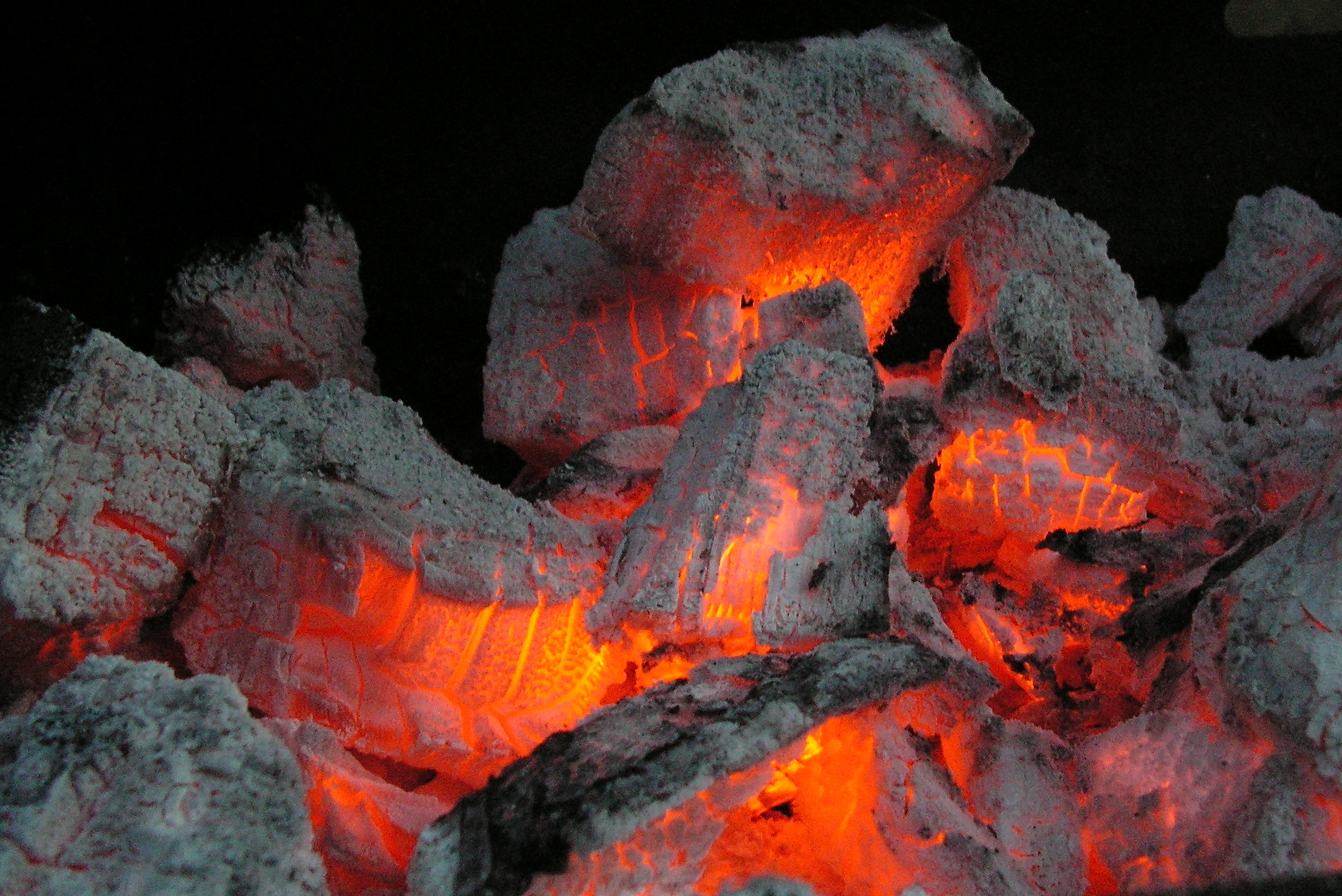
Smouldering of carbonaceous media (flameless combustion) is the most persistent fire phenomenon on Earth. Photo by Jens Buurgaard Nielsen (wikipedia).
Very large smouldering fires of carbonaceous natural media (coal seams and peatlands) have burnt since past millennia for long periods of time (months, years, decades). Peat fires burn during the warm/dry season in Indonesia, Canada, Russia, and USA. Hundreds of coal fires continuously burn in USA, China and India. Globally, the problem has grown to a current carbon release equivalent to 10-30% of man-made emissions, and a coal consumption rate five times faster than that of Germany.

Oct 1997: aerosol imaging by NASA TOMS shows the vast smoke haze released by smouldering peat fires in Indonesia. Photo by NASA.
Smouldering phenomena involve the burning of fossil fuels and are carbon-positive. This creates a positive feedback mechanism in the climate system: Moisture deficit and self-heating of carbonaceous media are enhanced under warmer climates and lead to more frequent smouldering fires. Warmer temperatures at high latitudes are already resulting in large smouldering fires in the Arctic (e.g., Alaska 2010).


Positive feedback by smouldering fires in the climate system (topics I study are represented by red arrows)

Stopping these fires is an engineering task at the Earth-scale. RAEng states that “geoengineering provides options in which the Earth’s climate is deliberately manipulated to offset the effects of global warming due to increasing levels of greenhouse gases”. I am contributing to this through the study of the ignition, spread, emissions, and suppression of smouldering phenomena. I aim to develop both fundamental understanding and technological solutions to this problem.


Accidental Burning of Fossil Fuels (RAEng 2011)

Monday, 1 August 2011

Quenching the Reactive Earth - talk given at UC Berkeley

Quenching the Reactive Earth - Accidental Burning of Fossil-Fuels and Geoengineering

I recently gave a research seminar at the Department of Mechanical Engineering at the University of California where I presented some of my research ideas. I start by summarizing my academic career to date and then proceed to talk about smouldering mega fires of natural coal and peat deposits. I have termed these "accidental burning of fossil-fuels".

Sunday, 10 July 2011

Smouldering mega fires are back in Russia: burning peat

Remember the Russian wildfires last summer that choked the city of Moscow and other regions? These were smouldering mega fires burning for several weeks and caused by the slow burning of dry peatlands. See here for an introduction to smouldering combustion.

Unfortunately, they are back this summer. Last week, they were several flaming fires burning in the region of Moscow. After flames were extinguished, the peat was seen to smoulder. Given the pollution, environmental and climate disaster that the smouldering mega fires brought last summer, the worry is that they might burn for months in 2011 as well. Given the extreme difficulty of suppressing smouldering fires when these have already grown out of proportions, the Fire Service is afraid that the fate might be in the hand of the rain.

In the meantime, Greenpeace reported about 20 peat fires in Russia.

PD: There are currently smouldering mega fire burning in North Carolina, Georgia and Indonesia.

Friday, 17 June 2011

Smouldering mega fire in North Carolina Wildlife Refuge

A peat fire has been burning in North Carolina since May 4 inside the Alligator River National Wildlife Refuge. It is only 75% contain so far, and the higher summer temperatures are arriving fast. It could burn for several more months.

It is believed to had started with a lightning strike [ref]. A recent local article reports "crews pump millions of gallons of water on stubborn ground fire that is part of the larger Pains Bay fire"


This brings reminisces of the 2008 Evans Road fire in the Pocosin Lakes National Wildlife Refuge (NC, not far from Alligator River National Wildlife Refuge). The initial flaming fronts were controlled within days, but the smouldering fire burned for 6 more months and consumed the organic soil down to 1 m deep (see hanging tree in the 2008 photo). 16000 ha were destroyed (2 times the year average for North Carolina). More than 400 firefighters stopped this smouldering mega fire by flooding and excavating the peat. Estimated costs in suppression alone are near $20 million. It was also believed to had started with a lightning strike.


Note that as opposed to flaming fires of forest land that can regrow in 50 to 100 years, peat is a pre-fossil fuel (or ancient carbon as Andy Revkin labelled in his twit), it takes >10,000 year to form. Thus peat fires are a net source of carbon emissions and provide a positive feedback to climate change. This accidental fossil-fuel burning taking place now releases carbon that will not be recaptured by new peat until the year 12011. By then, the Earth climate system had plenty of time to response and lead to a possible global change. I discussed this a recent talk I gave at the last European Geoscience Union, see previous blog entry here and insert below. The title was "Climate Feedbacks on Smouldering Earth".

Climate Feedbacks on Smouldering Earth (talk at EGU Vienna 2011)

Wednesday, 15 June 2011

Bifurcations and Forecasting Scenarios - in CO2 emissions

I was quickly reading over a new paper on renewable energy policy [Krey and Clarke 2011], and realized that there is a visual link between global CO2 emission predictions and a bifurcation diagram.

The bigger plot below shows "Historic and projected global fossil and industrial CO2 emissions across all scenarios between 1900 and 2100",  Figure 1 in Krey and Clarke 2011. The red-frame insert is the bifurcation diagram of the the logistic equation taken from here.
 

From Wikipedia: bifurcation diagram shows the possible long-term values (equilibria/fixed points or periodic orbits) of a system as a function of a bifurcation parameter in the system. It is usual to represent stable solutions with a solid line and unstable solutions with a dotted line.

Granted that the link is more visual than fundamental, and requires an artistic licence of some degree. Note that the first bifurcation starts at the point separating historical values from projected (aka predicted) values. Thus, history is the stable solution, and forecasts are unstable solutions, the source of the uncertainty. This could hint towards a new topic for the application of NKS (New Kind of Science) approach and his reliance on cellular automata similar to the logistic equation to explain complex systems.

Wednesday, 6 April 2011

Oral presentation at EGU: Climate Feedbacks on Smouldering Earth

Yesterday 6 April, I gave this talk on Climate Feedbacks on Smouldering Earth at the 2011 European Geosciences Union, Vienna:

Climate Feedbacks on Smouldering Earth (talk at EGU Vienna 2011)

Abstract:

Climate Feedbacks on Smouldering Earth: Enhancement of Moisture deficit and self-heating of fossil and pre-fossil soils
 

Guillermo Rein
University of Edinburgh, School of Engineering, United Kingdom (G.Rein@ed.ac.uk)

Global smouldering phenomena, the slow, low-temperature, flameless burning of organic soils, is the most persistent type of combustion phenomena and the longest continuously fires on Earth (>6,000 years). It take place since deep times and in many ecosystems, special boreal and tropical ones. These are accidental sources of carbon emissions that during millennia have been slowly burning fuels with zero energy efficiency, consuming large amounts of fossil energy resources (coal seams), destroying natural ecosystems (peatlands) and emitting greenhouse gases and pollutants. The global problem has grown in the last decades to an estimated release varying between 10 to 40% of the man-made carbon emissions, and a coal consumption rate at least 5 times that of Germany. Because it involves the burning of fossil and pre-fossil fuels, this is a carbon-positive wildfire phenomena. This creates feedbacks in the climate system because moisture deficit and self-heating of organic soils
are enchanted under warmer climate scenarios and would lead to more frequent smouldering fires. Warmer temperatures at high latitudes are resulting already in more Artic fires and unprecedented permafrost thaw exposing large soil carbon pools to smouldering for the fist time since millennia.
While flaming fires have been a central focus in fire research, smouldering fires are as important in terms
of ecosystem damage, atmospheric emissions and socioeconomic threats but have received little attention. Moreover, these fires are difficult or impossible to detect with current remote sensing methods because the chemistry is significantly different, their thermal signature is much smaller, and the plume is much less buoyant.

Thursday, 4 November 2010

On the Haze produced by smouldering fires in Indonesia

The recent article of Banyan in The Economist, Where there's smoke, talks about the endemic haze that invades large parts of South East Asia during most dry sessions.

Banyan says "The haze has returned this year. Air-pollution indices in Singapore and the south of the Malaysian peninsula had reached their highest levels since 2006 until rainfall on October 23rd brought relief. In parts of Sumatra, the neighbouring Indonesian island spewing out the smog, it had been getting hard to breathe"

The haze is caused by large and creeping smouldering fires. Under drought conditions, peat fires are a disproportionate contributor to biomass burning and atmospheric emissions. After the study of the 1997 extreme haze event in South-East Asia, the scientific community recognised the environmental and economic threats. The haze was caused by the spread of vast smouldering peat fires in Indonesia, burning below the surface for months during the El Niño climate event. It has been calculated that the 1997 fires released between 0.81 and 2.57 Gton of carbon gases (13–40% of global emissions).

Smouldering fires are an unresolved issue of large global magnitude involving science, technology, environment and climate. I comment on each here.


Science Issues: lack of knowledge

Smouldering fires, the slow, low-temperature, flameless burning, represent the most persistent type of combustion phenomena and the longest continuously fires on Earth system (>6,000 years old fire in Australia). Although interactions between flaming fires and the Earth system have been a central focus, smouldering fires could be as important in terms of ecosystem damage, atmospheric emissions and socioeconomic threats but have received little attention. Differences with flaming fires are important.

Technology and engineering issues: they cannot be extinguished or rapidly detected
Smouldering fires propagate slowly through organic layers of the forest ground and can reach deeper horizons if large cracks, natural piping or channel systems exist. Once ignited, they are particularly difficult to extinguish despite extensive rains, weather changes or fire-fighting attempts, and can persist for long periods of time (months, years) spreading deep and over extensive areas. Moreover, these fires are difficult or impossible to detect with current remote sensing methods because the chemistry is significantly different, their thermal signature is much smaller, and the plume is much less buoyant. The technology and engineering to effectively and economically tackle these fires does not currently exist. Brute force and trial are error are the most effective tools available at the moment. This is clearly not enough for such a large global problem.


Environmental issues: highly damaging and irreversible
Smouldering affects ecosystem that are not adapted to fire. Their long duration (from weeks to decades) leads to extensive loss of mass above 90% of the organic content. For example, a layer of 5 m of peat is reduced to 30 cm. Whereas flaming fires result in superficial heating of the soil, smouldering leads to sterilization. Smouldering combustion is characteristically an incomplete oxidation reaction and thus emits in addition to CO2 and water vapour, a mixture of volatile organic species (e.g. CH4, C3H8, CH3OH), polyaromatic hydrocarbons, CO, and particulates at a higher yield than flaming fires. It favours CO to CO2 ratios around unity (as opposed to ratios around 0.1 in flaming combustion), so CO is as important as CO2 in emission from smouldering fires. Traces of other gases are emitted as well.

The photo above shows peat fire in the National Park of Las Tablas de Daimiel, Spain. Photo taken by Guillermo Rein on November 25, 2009 in the area adjacent to the National Park, near Molimocho.

Climate issues: positive feedback
These wildfires burn fossil or pre-fossil fuels and thus are the only carbon-positive natural fire phenomena. This creates feedbacks in the climate system because soil moisture deficit and self-heating are enchanted under warmer climate scenarios and lead to more frequent fires. Warmer temperatures at high latitudes are resulting in more frequent Artic fires. Unprecedented permafrost thaw is leaving large soil carbon pools exposed to smouldering fires for the fist time since millennia.

Hope some of these issues are resolved in the incoming decades. I aim at contributing to the solutions.

Sunday, 30 May 2010

Ancient climate change is a burning issue

As published this month in Nature Geoscience, forest wildfires that took place in Greenland millions of years ago are helping scientists to predict the effects of climate change more accurately. Claire Belcher (UCD), who led the work, and colleagues studied 200 million-year-old fossils – which contain remains of dead and burnt plants – have shown that a change in vegetation, along with warmer temperatures and more frequent storms, led to a five-fold increase in natural wildfires in East Greenland at this time. Their study will help scientists to broaden their understanding of past Earth climates and give researchers fresh insight to improve models of the possible effects of future climate change.

Millions of years ago in East Greenland, warming climate and high levels of CO2 in the atmosphere caused plants to evolve from having thick to narrow leaves, which helped prevent them from losing water. Laboratory experiments (in the BRE Centre for Fire Safety Engineering) have shown plants of this shape to be more flammable, and therefore prone to wildfires. The study sheds light on how climate-driven changes in vegetation can cause increases in the flammability of plants. This research may help understanding of whether or not plant life could become more flammable based on global warming estimates.

The work, "in a truly innovative test of their hypothesis, used a Fire Propagation Apparatus calorimeter to test the flammability of modern plant analogues to the Triassic and Jurassic vegetation"

 
 A plant sample of Monkey puzzle being tested for fire behaviour in the Flame Propagation Apparatus calorimeter

The joint research between Fire engineers at the University of Edinburgh and Earth scientists at University College Dublin, the University of Oxford and the Field Museum of Natural History in Chicago, was funded by EU Marie Curie and the University of Edinburgh’s BRE Centre for Fire Safety Engineering and published in Nature Geoscience. Their work also made it onto the front cover (see illustration bellow).

  Actualcover of the Nature Geoscience issue of June 2010showing Scientific illustration of Greenland's vegeration 200 Myr ago.

Dr Claire Belcher of University College Dublin, said:
"We wanted to test a theory that says if atmospheric CO2 doubles, forest fires in North America may increase by 44 per cent. We tested this by studying how ancient plants and fire changed in the past and used modern experiments on living plants – much like those that grew 200 million years ago – to show that under these conditions, plants became more flammable".

Dr Guillermo Rein, co-author of the work, of the University of Edinburgh’s School of Engineering, said:
"This research brought together scientists from very different backgrounds, and doing so has given us insights into ancient wildfires that we might otherwise not have had. This is the first time our cutting-edge flammability technology has been applied to test geoscience hypothesis and highlights how new ideas can be formed when scientists from very different backgrounds meet".

For more information please contact:
Dr Claire Belcher, belchercm (at) gmail.com and see her website

Wednesday, 27 January 2010

An incomplete view on climate change

Prof Mike Hulme from University of East Anglia said it better: "Climate scientists get kudos from working on an issue in the public eye but with that kudos comes responsibility". His words resonate well with my overall stand on climate change.

The level of investment and prestige put on the scientific disciplines studying climate change has boosted in the last decade. This was to be expected, because they play a key role in a global and important topic that matters to society, industry and governments. Their achievements (tiny or small they might be) must be communicated, celebrated worldwide and commended with prestige, awards and further grants to continue the good work. Consequently, when errors (tiny or small they might be) are found, their professional responsibility must be required in proportion to the prestige, awards and grants gained.

In the same way, climate experts that have received awards, grants and professional prestige should not be surprised to find themselves under proportionally high pressure to review and justify once again their results.

Summary: "For everyone to whom much is given, of him shall much be required" Luke 12:48


I am not an expert in the topic, but I also have some views on it.

As a scientist doing research at the University of Edinburgh on thermal science, I see climate change as a very complex issue, dealing with an immense system, the Earth. The level of uncertainty attached to any prediction on a system this large has to be proportional to its size, immense. All my professional respect goes to climate scientists who are dealing with a very difficult problem to tackle.

As an engineer by training and an consultant to industry, I feel that most core solutions proposed so far to tackle the problem of climate change tend to lead as well towards improvements in energy efficiency, development of new technologies, alternative ways of engineering thinking and would foster the creation of new paradigms. This would be great news indeed. Even if climate change were not to be that 'fast' at the end, some proposed solutions could be good just by itself.

And as a citizen of the world, I worry that lobbies of many different colours and aims claim to understand well enough the complex scientific concepts behind climate change and dare to produce crystal-clear conclusions that might not be taking into account all the uncertainties.

Not an easy topic indeed, but worth our attention and effort, and also the pains that come from the heated debate.


NOTE: I write this on the train to London. Great views today of the English country side!