Friday, 10 August 2012

Forecasting fire dynamics: tomorrow's infrastructure protection


Imagine a technology able to forecast fires. It would lead to a paradigm shift in the response to emergencies and provide the Fire Services with essential information about the ongoing blaze with some lead time (i.e. seconds or minutes ahead of the event). It would also allow for the future of infrastructure protection to be implemented in smart buildings.

316 s after ignition. could this be forecasted ahead of time? [Rein 2012]
But despite advances in the understanding of fire dynamics over the past decades and despite the advances in computational capacity, our ability to predict the behaviour of fires in general and building fires in particular remains very limited. The state-of-the-art of computational fire dynamics is not fast or accurate enough to provide valid forecasts on time...

Paleofuture: forecast made in 1900 of the fire-fighting in the year 2000.
By Villemard, 1910, National Library of France
But we found a way to solve this problem. In a recently finished PhD thesis and set of published  papers, we show the technology is possible. We  propose to use sensor measurements of the ongoing fire to steer and accelerate computer simulations. This takes advantage of the concept of data assimilation (similar to what meteorologists do to forecast the weather).

Our method consists on combining a simplified spread mechanism with a fire model, and use sensor data to find the fire parameters that dominate the spread. This way, the model automatically recovers information lost by approximations in the physics, chemistry and the maths.

Concept of data assimilation and the sensor steering of model predictions [Cowlard et al 2010]
 A series of compartment fire cases haven been studied this way, and we investigated two different fire models. First a simple two-zone model, and then a state-of-the-art computational fluid dynamics (CFD) model.
 
For the simple two-zone forecast model, the firepower and the growth rate were estimated correctly up to 30 s ahead of the event: the model was faster than the fire. This was the very first time a fire forecast technology was demonstrated and the first time positive lead times were reached. The results show that the simple model is able to deliver fast and useful information about the ongoing fire thanks to the sensor data. This initial work demonstrated that the new methodology is effective, and allowed us to move to the next level of complexity. 


Computational domain of the fire
compartment [Jahn et al 2012]
For the CFD forecast model, we use a coarse grid that provides short computation times. Spatially resolved forecasts were obtained in reasonable time. It is even possible to estimate the growth rates of several different spreading fires simultaneously. Although actual positive lead times were not reached here with CFD, it is shown that the use of relatively coarse grid size in the forward model significantly accelerates the assimilation (up to 100 times faster) without loss of forecast accuracy. Actual positive lead times with CFD are possible by reducing the computational time by at least another order of magnitude in the near future using high performance computing techniques.


Dalmarnock Fire Test One conducted on July 25th.
Our latest bit on the topic was a test case using the measurement data  from a real fire. We forecasted in near real time the Dalmarnock Test One, conducted in 2006 inside the 3.5 x 4.7 x 2.4 m living room in a high rise building in the city of Glasgow. It was possible to find a good fit between the observations and the forecast using CFD.


The results are a fundamental step towards the development of forecast technologies able to lead the fire emergency response. The work opens the door to forecasting fire dynamics, but it is an on-going research topic.

We are happy that the work has been featured in the media and  people is being exposed to this novel idea:

Our research resources on the topic (in reverse chronological order):

1) Jahn, Rein and Torero (2012), Forecasting fire dynamics using inverse
Computational Fluid Dynamics and Tangent Linearisation, Advances in
Engineering Software 47 (1), pp. 114-126. doi:10.1016/j.advengsoft.2011.12.005

2) Rein (2012), Plenary Keynote: Numerical forecasting of fire dynamics: tomorrow's infrastructure protection - Young Investigators Conference of the European Community on Computational Methods in Applied Sciences (ECCOMAS), Aveiro. See below.

3) Jahn, Rein and Torero (2011), Forecasting Fire Growth using an Inverse CFD Modelling Approach in a Real-Scale Fire Test, Fire Safety Science 10, pp 1349-1358, doi:10.3801/IAFSS.FSS.10-1349 

4) Jahn, Rein and Torero (2011), Forecasting Fire Growth using an Inverse Zone Modelling Approach, Fire Safety Journal 46, pp. 81–88. doi:10.1016/j.firesaf.2010.10.001. Paper shortlisted for 2010 Lloyd's Science of Risk Prize.

5) Jahn (2010), Inverse Modelling to Forecast Enclosure Fire Dynamics, PhD Thesis, School of Engineering, University of Edinburgh.

6) Cowlard, Jahn, Empis, Rein and Torero (2010), Sensor Assisted Fire Fighting, Fire Technology 46 (3), doi:10.1007/s10694-008-0069-1


Numerical forecasting of fire dynamics (Plenary YIC ECCOMAS)

Sunday, 29 July 2012

Brunel y Martinez


Carta envida hoy al director del periódico El Mundo.
--------------------

Sr. Director:

¿Martínez?. Fuente: Wikipedia
El artículo recientemente publicado en su periódico y que firma Luis Martínez ("De 'Trainspotting' a 'Disappointing'", 28/07/2012) ignora valientemente quien es uno de los personajes más importantes de la historia de la humanidad. En referencia a ceremonia de apertura de los Juegos Olímpicos de Londres, el artículo dice " ¿De qué se reiría Brannagh con su muy shakespeariana apostura? ¿De explotar a los pobres campesinos (él 'hacía' de empresario, dedujimos)"

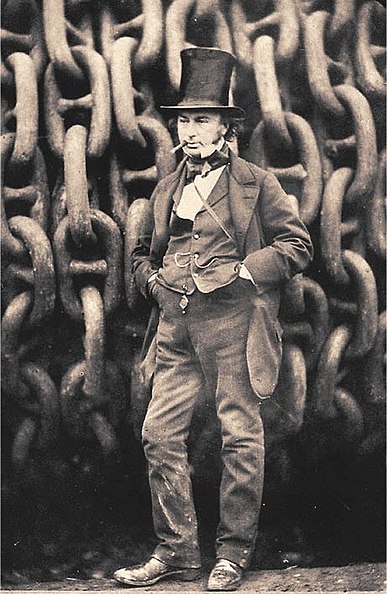
Durante la ceremonia, el actor Kenneth Branagh hacia el papel de Isambard Kingdom Brunel (1806-1859), ingeniero durante la revolución industrial y uno de los personajes británicos más importante de todos los tiempos. Es relativamente normal que en España no se sepa mucho de Brunel, dada la poca importancia que tienen la ciencia y la tecnología en el país, pero lo peor es la asociación automática y trivial con la explotación de campesinos.  Sin Brunel, el Señor Martínez no existiría, o sería un campesino, y El Mundo sería muchísimo más pequeño.


Guillermo Rein

Edimburgo, Reino Unido

Wednesday, 25 July 2012

Interview on the accidental burning of ancient carbon

I have been interviewed for GeoLog, the blog of the European Geoscience Union (EGU):

Geotalk: Dr Guillermo Rein


It  features my research on smouldering combustion, the largest fires on Earth and the accidental burning of ancient carbon. It is released as the first interview in the new monthly blog column called Geotalk, featuring short interviews with scientists about their research.

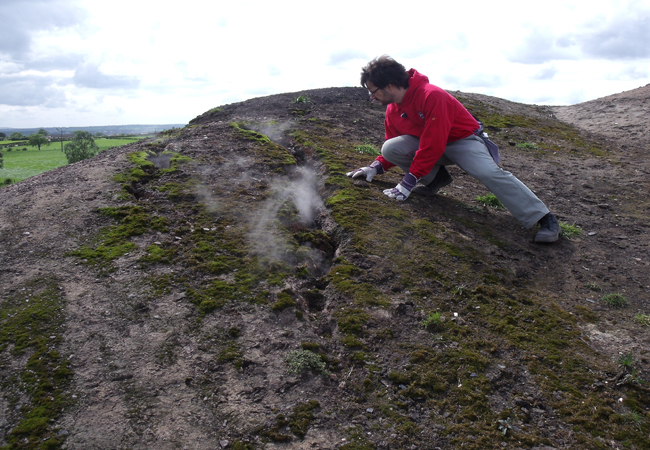
Dr Rein next to a water vapour vent on top of the 30m-high Bogside bing, near Glasgow, Scotland. This bing is a man-made hill of mining waste, and started to smoulder in 2009, approximately 80 years after the closure of the pit. The spread of the combustion is accompanied by the development of vents ahead of the front. (Image by Dr Ricky Carvel and Dr Guillermo Rein, distributed under a CC BY-SA Creative Commons licence)

Friday, 20 July 2012

Smouldering fire of organic soil in Oregon National Wildlife Refuge


The dry organic soil in Malheur National Wildlife Refuge has ignited and several smouldering hot spots have been burning since last week. They were started by the flaming Miller Homestead wildfire on the evening of July 12 but the smouldering fire is now slowly self-spreading.

Suppression attempts are under way by the Fire Service including local flooding and compartmentation. It is essential to act quickly. Under dry conditions as the ones currently present in Oregon, smouldering fires can last for months, releasing large quantities of old carbon stored in the soil.

Smouldering organic soil after the Miller Homestead Wildfire moved onto the refuge the evening of July 12. Photo Credit USFWS.


Monday, 16 July 2012

Workshop on Smouldering Wildfires and The Earth System


I Workshop on Smouldering Wildfires and the Earth System

at University of Edinburgh, King's Buildings

Fri 27 July 2012, from 9am to 1:30pm.


Taking advantage of the visit of a few brilliant researchers working on smouldering wildfires, I am organizing a small workshop on the topic for Friday 27 July to bring together fire dynamic, engineering and geosciences. Small, but the first of its kind. It is focus mostly on peat lands, but other ecosystems and fuels are welcome (eg, coal, organic soils, litter). All are invited (no fees), and interdisciplinary backgrounds and topics are specially welcome. If you want to attend or give a talk, please send me an email to G.Rein@imperial.ac.uk.

Some smouldering peat experiments will be conducted in the lab on Thursday afternoon. Workshop attendees are invited to join us to witness/help with the tests.

See google map here to the venue, Seminar room in the 3rd floor of Alexander Graham Bell Building, University of Edinburgh, King's Buildings campus.


http://www.imaggeo.net/view/642
"Smouldering fires, the slow, low-temperature, flameless burning, represent the most persistent type of combustion phenomena, and leads to the largest and oldest fires on Earth. Indeed, smouldering megafires of peat occur with some frequency in for example North America, Siberia, the British Isles and South-East Asia during the dry session. Smouldering fires propagate horizontally and vertically through organic layers of the ground and can reach very deep where large cracks or natural piping systems exist. This threatens to release ancient carbon stored deep into the soil. Once ignited, they are particularly difficult to extinguish despite extensive rains, weather changes, or fire-fighting attempts, and can persist for long periods of time (months, years, or even centuries), spreading into the ground and over extensive areas." from the chapter Smouldering Fires and Natural Fuels, 2013, written by G Rein for an incoming Wiley book "

Fire Phenomena in the Earth System – An Interdisciplinary Approach to Fire Science".


UPDATE: Incidentally, I have just been interviewed for GeoLog, the blog of the European Geoscience Union, on smouldering fires and accidental burning of ancient carbon.


Final Programme (click on title to see pdf of presentation slides):

- Dr Guillermo Rein from Imperial College London (UK) to give an overview of smouldering fires on the Earth System.
- Dr Rory Hadden from University of Western Ontario (Canada) to talk about carbon emissions from smouldering fires.
- Dr Matt Davies, University of Glasgow (UK) to talk about peat fires and ecology in Scotland.
- Dr Adam Watts from University of Florida (USA) to talk about the role of fires in tropical wetlands.
- Nuria Prat from University College Dublin (Ireland) to talk about postfire effects of smouldering peat in a boreal pine forest.
- Dr Haixiang Chen from State Key Laboratory of Fire Science (China) to talk about computational modelling of smouldering fire.
- Dr Jon Yearsley from University College Dublin (Ireland) to talk about celullar automata modelling of peat fires.
- Keith Torrance from University of Strathclyde (UK) and University of Alaska (USA) to talk on smouldering coal heaps in Lanarkshire, Scotland.
- Dr Christine Switzer  from University of Strathclyde (UK)  to talk about the chemical and physical changes induced by smouldering on inert soil samples.

Tuesday, 10 July 2012

Tilbury smouldering fire

Update on the 2012 Tilbury biomass fire (which was discussed in Feb this in blog). RWE officials have now confirmed to the press that the fire was caused by self-heating of biomass pellets leading to a smouldering fire:  "it is likely that the increased levels of oxygen caused the ignition of the smouldering dust" [Utility Week].

Just to note that the wording used by RWE is not the most fortunate. It was not the oxygen which caused the fire, but the thermal conditions used to store the biomass pellets (too large piles and/or poor ventilation, etc). 

Thursday, 5 July 2012

Geoengineering and Burt Rutan - The Economist

Letter to the Editor of The Economist sent on 6 of June 2012.

----


Dear Sir,

SpaceShipOne (designed by Mr Rutan)
at the National Air and Space Museum, Washington D.C.
Photo from wikipedia.
In your last Brain Scan article ("A maverick in flight", Technology Quarterly, June 2012) on the accomplishments of Burt Rutan, a pioneering and unconventional aerospace engineer, I find entertaining how Mr Rutan uses acrobatics to announce that global warming will lead environmentalists into an engineering breakthrough. He refers to unprecedented global warming and the tipping point for atmospheric carbon dioxide as "it’s just nonsense".

But this might not be a pejorative term for him. The statement is followed by the clarification:
 "You run into them [breakthroughs] when you’ve found something that doesn’t make sense and you find a way to make it work".

Maybe he is announcing the arrival of geoengineering. I would approve.

Best Regards,

-
Dr Guillermo Rein
Senior Lecturer in Mechanical Engineering
Imperial College London
http://www.eng.ed.ac.uk/~grein