Friday, 10 August 2012

Forecasting fire dynamics: tomorrow's infrastructure protection


Imagine a technology able to forecast fires. It would lead to a paradigm shift in the response to emergencies and provide the Fire Services with essential information about the ongoing blaze with some lead time (i.e. seconds or minutes ahead of the event). It would also allow for the future of infrastructure protection to be implemented in smart buildings.

316 s after ignition. could this be forecasted ahead of time? [Rein 2012]
But despite advances in the understanding of fire dynamics over the past decades and despite the advances in computational capacity, our ability to predict the behaviour of fires in general and building fires in particular remains very limited. The state-of-the-art of computational fire dynamics is not fast or accurate enough to provide valid forecasts on time...

Paleofuture: forecast made in 1900 of the fire-fighting in the year 2000.
By Villemard, 1910, National Library of France
But we found a way to solve this problem. In a recently finished PhD thesis and set of published  papers, we show the technology is possible. We  propose to use sensor measurements of the ongoing fire to steer and accelerate computer simulations. This takes advantage of the concept of data assimilation (similar to what meteorologists do to forecast the weather).

Our method consists on combining a simplified spread mechanism with a fire model, and use sensor data to find the fire parameters that dominate the spread. This way, the model automatically recovers information lost by approximations in the physics, chemistry and the maths.

Concept of data assimilation and the sensor steering of model predictions [Cowlard et al 2010]
 A series of compartment fire cases haven been studied this way, and we investigated two different fire models. First a simple two-zone model, and then a state-of-the-art computational fluid dynamics (CFD) model.
 
For the simple two-zone forecast model, the firepower and the growth rate were estimated correctly up to 30 s ahead of the event: the model was faster than the fire. This was the very first time a fire forecast technology was demonstrated and the first time positive lead times were reached. The results show that the simple model is able to deliver fast and useful information about the ongoing fire thanks to the sensor data. This initial work demonstrated that the new methodology is effective, and allowed us to move to the next level of complexity. 


Computational domain of the fire
compartment [Jahn et al 2012]
For the CFD forecast model, we use a coarse grid that provides short computation times. Spatially resolved forecasts were obtained in reasonable time. It is even possible to estimate the growth rates of several different spreading fires simultaneously. Although actual positive lead times were not reached here with CFD, it is shown that the use of relatively coarse grid size in the forward model significantly accelerates the assimilation (up to 100 times faster) without loss of forecast accuracy. Actual positive lead times with CFD are possible by reducing the computational time by at least another order of magnitude in the near future using high performance computing techniques.


Dalmarnock Fire Test One conducted on July 25th.
Our latest bit on the topic was a test case using the measurement data  from a real fire. We forecasted in near real time the Dalmarnock Test One, conducted in 2006 inside the 3.5 x 4.7 x 2.4 m living room in a high rise building in the city of Glasgow. It was possible to find a good fit between the observations and the forecast using CFD.


The results are a fundamental step towards the development of forecast technologies able to lead the fire emergency response. The work opens the door to forecasting fire dynamics, but it is an on-going research topic.

We are happy that the work has been featured in the media and  people is being exposed to this novel idea:

Our research resources on the topic (in reverse chronological order):

1) Jahn, Rein and Torero (2012), Forecasting fire dynamics using inverse
Computational Fluid Dynamics and Tangent Linearisation, Advances in
Engineering Software 47 (1), pp. 114-126. doi:10.1016/j.advengsoft.2011.12.005

2) Rein (2012), Plenary Keynote: Numerical forecasting of fire dynamics: tomorrow's infrastructure protection - Young Investigators Conference of the European Community on Computational Methods in Applied Sciences (ECCOMAS), Aveiro. See below.

3) Jahn, Rein and Torero (2011), Forecasting Fire Growth using an Inverse CFD Modelling Approach in a Real-Scale Fire Test, Fire Safety Science 10, pp 1349-1358, doi:10.3801/IAFSS.FSS.10-1349 

4) Jahn, Rein and Torero (2011), Forecasting Fire Growth using an Inverse Zone Modelling Approach, Fire Safety Journal 46, pp. 81–88. doi:10.1016/j.firesaf.2010.10.001. Paper shortlisted for 2010 Lloyd's Science of Risk Prize.

5) Jahn (2010), Inverse Modelling to Forecast Enclosure Fire Dynamics, PhD Thesis, School of Engineering, University of Edinburgh.

6) Cowlard, Jahn, Empis, Rein and Torero (2010), Sensor Assisted Fire Fighting, Fire Technology 46 (3), doi:10.1007/s10694-008-0069-1


Numerical forecasting of fire dynamics (Plenary YIC ECCOMAS)

Sunday, 29 July 2012

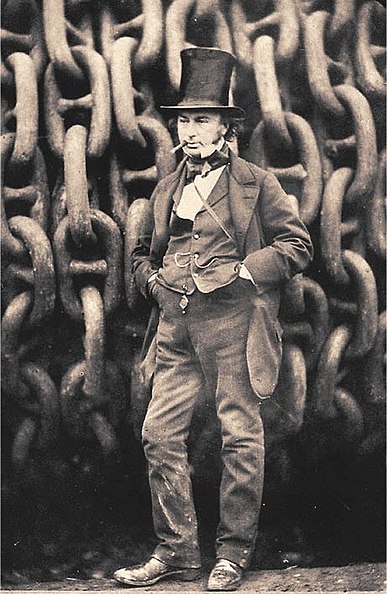
Brunel y Martinez


Carta envida hoy al director del periódico El Mundo.
--------------------

Sr. Director:

¿Martínez?. Fuente: Wikipedia
El artículo recientemente publicado en su periódico y que firma Luis Martínez ("De 'Trainspotting' a 'Disappointing'", 28/07/2012) ignora valientemente quien es uno de los personajes más importantes de la historia de la humanidad. En referencia a ceremonia de apertura de los Juegos Olímpicos de Londres, el artículo dice " ¿De qué se reiría Brannagh con su muy shakespeariana apostura? ¿De explotar a los pobres campesinos (él 'hacía' de empresario, dedujimos)"

Durante la ceremonia, el actor Kenneth Branagh hacia el papel de Isambard Kingdom Brunel (1806-1859), ingeniero durante la revolución industrial y uno de los personajes británicos más importante de todos los tiempos. Es relativamente normal que en España no se sepa mucho de Brunel, dada la poca importancia que tienen la ciencia y la tecnología en el país, pero lo peor es la asociación automática y trivial con la explotación de campesinos.  Sin Brunel, el Señor Martínez no existiría, o sería un campesino, y El Mundo sería muchísimo más pequeño.


Guillermo Rein

Edimburgo, Reino Unido

Wednesday, 25 July 2012

Interview on the accidental burning of ancient carbon

I have been interviewed for GeoLog, the blog of the European Geoscience Union (EGU):

Geotalk: Dr Guillermo Rein


It  features my research on smouldering combustion, the largest fires on Earth and the accidental burning of ancient carbon. It is released as the first interview in the new monthly blog column called Geotalk, featuring short interviews with scientists about their research.

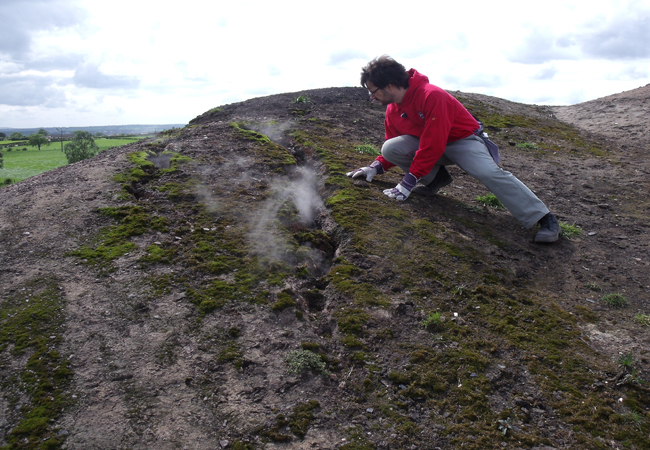
Dr Rein next to a water vapour vent on top of the 30m-high Bogside bing, near Glasgow, Scotland. This bing is a man-made hill of mining waste, and started to smoulder in 2009, approximately 80 years after the closure of the pit. The spread of the combustion is accompanied by the development of vents ahead of the front. (Image by Dr Ricky Carvel and Dr Guillermo Rein, distributed under a CC BY-SA Creative Commons licence)

Friday, 20 July 2012

Smouldering fire of organic soil in Oregon National Wildlife Refuge


The dry organic soil in Malheur National Wildlife Refuge has ignited and several smouldering hot spots have been burning since last week. They were started by the flaming Miller Homestead wildfire on the evening of July 12 but the smouldering fire is now slowly self-spreading.

Suppression attempts are under way by the Fire Service including local flooding and compartmentation. It is essential to act quickly. Under dry conditions as the ones currently present in Oregon, smouldering fires can last for months, releasing large quantities of old carbon stored in the soil.

Smouldering organic soil after the Miller Homestead Wildfire moved onto the refuge the evening of July 12. Photo Credit USFWS.


Monday, 16 July 2012

Workshop on Smouldering Wildfires and The Earth System


I Workshop on Smouldering Wildfires and the Earth System

at University of Edinburgh, King's Buildings

Fri 27 July 2012, from 9am to 1:30pm.


Taking advantage of the visit of a few brilliant researchers working on smouldering wildfires, I am organizing a small workshop on the topic for Friday 27 July to bring together fire dynamic, engineering and geosciences. Small, but the first of its kind. It is focus mostly on peat lands, but other ecosystems and fuels are welcome (eg, coal, organic soils, litter). All are invited (no fees), and interdisciplinary backgrounds and topics are specially welcome. If you want to attend or give a talk, please send me an email to G.Rein@imperial.ac.uk.

Some smouldering peat experiments will be conducted in the lab on Thursday afternoon. Workshop attendees are invited to join us to witness/help with the tests.

See google map here to the venue, Seminar room in the 3rd floor of Alexander Graham Bell Building, University of Edinburgh, King's Buildings campus.


http://www.imaggeo.net/view/642
"Smouldering fires, the slow, low-temperature, flameless burning, represent the most persistent type of combustion phenomena, and leads to the largest and oldest fires on Earth. Indeed, smouldering megafires of peat occur with some frequency in for example North America, Siberia, the British Isles and South-East Asia during the dry session. Smouldering fires propagate horizontally and vertically through organic layers of the ground and can reach very deep where large cracks or natural piping systems exist. This threatens to release ancient carbon stored deep into the soil. Once ignited, they are particularly difficult to extinguish despite extensive rains, weather changes, or fire-fighting attempts, and can persist for long periods of time (months, years, or even centuries), spreading into the ground and over extensive areas." from the chapter Smouldering Fires and Natural Fuels, 2013, written by G Rein for an incoming Wiley book "

Fire Phenomena in the Earth System – An Interdisciplinary Approach to Fire Science".


UPDATE: Incidentally, I have just been interviewed for GeoLog, the blog of the European Geoscience Union, on smouldering fires and accidental burning of ancient carbon.


Final Programme (click on title to see pdf of presentation slides):

- Dr Guillermo Rein from Imperial College London (UK) to give an overview of smouldering fires on the Earth System.
- Dr Rory Hadden from University of Western Ontario (Canada) to talk about carbon emissions from smouldering fires.
- Dr Matt Davies, University of Glasgow (UK) to talk about peat fires and ecology in Scotland.
- Dr Adam Watts from University of Florida (USA) to talk about the role of fires in tropical wetlands.
- Nuria Prat from University College Dublin (Ireland) to talk about postfire effects of smouldering peat in a boreal pine forest.
- Dr Haixiang Chen from State Key Laboratory of Fire Science (China) to talk about computational modelling of smouldering fire.
- Dr Jon Yearsley from University College Dublin (Ireland) to talk about celullar automata modelling of peat fires.
- Keith Torrance from University of Strathclyde (UK) and University of Alaska (USA) to talk on smouldering coal heaps in Lanarkshire, Scotland.
- Dr Christine Switzer  from University of Strathclyde (UK)  to talk about the chemical and physical changes induced by smouldering on inert soil samples.

Tuesday, 10 July 2012

Tilbury smouldering fire

Update on the 2012 Tilbury biomass fire (which was discussed in Feb this in blog). RWE officials have now confirmed to the press that the fire was caused by self-heating of biomass pellets leading to a smouldering fire:  "it is likely that the increased levels of oxygen caused the ignition of the smouldering dust" [Utility Week].

Just to note that the wording used by RWE is not the most fortunate. It was not the oxygen which caused the fire, but the thermal conditions used to store the biomass pellets (too large piles and/or poor ventilation, etc). 

Thursday, 5 July 2012

Geoengineering and Burt Rutan - The Economist

Letter to the Editor of The Economist sent on 6 of June 2012.

----


Dear Sir,

SpaceShipOne (designed by Mr Rutan)
at the National Air and Space Museum, Washington D.C.
Photo from wikipedia.
In your last Brain Scan article ("A maverick in flight", Technology Quarterly, June 2012) on the accomplishments of Burt Rutan, a pioneering and unconventional aerospace engineer, I find entertaining how Mr Rutan uses acrobatics to announce that global warming will lead environmentalists into an engineering breakthrough. He refers to unprecedented global warming and the tipping point for atmospheric carbon dioxide as "it’s just nonsense".

But this might not be a pejorative term for him. The statement is followed by the clarification:
 "You run into them [breakthroughs] when you’ve found something that doesn’t make sense and you find a way to make it work".

Maybe he is announcing the arrival of geoengineering. I would approve.

Best Regards,

-
Dr Guillermo Rein
Senior Lecturer in Mechanical Engineering
Imperial College London
http://www.eng.ed.ac.uk/~grein

Friday, 22 June 2012

Safety disadvantage of Plastic houses

Letter to the Editor of The Independent. Sent on 22 Jun 2012

----

Dear Sir,

EFTE roofs used in the Eden Project (wikipedia)
In your article "Here's one I won earlier" (21 Jun 2012), Alex Aldridge describes the winning idea of "Plastic houses" (eco homes with ETFE roofs) at the European Inventor Awards. He mentions its three main advantages (energy efficiency, blasts resistant, and light weight) but only two minor disadvantages (easy to cut through, noisy in rain).
He forgot to mention the most important of the disadvantages that happens to cancel one of advantages: while EFTE might be suited to resist terrorist bomb blasts, it definitely cannot resist fire. Moreover, it feeds to it as EFTE is a flammable material.

This brings bad news to plastic housing from a safety perspective.

Best Regards,
Dr Guillermo Rein
Senior Lecturer in Mechanical Engineering
Imperial College London
http://www.imperial.ac.uk/people/g.rein

Wednesday, 20 June 2012

Inside peer review: a (top science)^3 case

I just found a very interesting exercise of transparency in peer review on a top scientific topic (climate change) in a top scientific journal (PNAS) by a top researcher (Prof Lindzen, MIT). Note that Prof Lindzen portrays a minority scientific view, he thinks climate change forecasts are uncertain and might be overestimating warming:


I found this after reading the NYT article "Clouds’ Effect on Climate Change Is Last Bastion for Dissenters" by J Gillis, April 30, 2012.

Disclaimer: I post this becuase it is a very interesting and unique case of how peer review works inside a top journal (for good and for bad). This does not mean I support Prof Lindzen's scientific work (my expertise is in fire dynamics).

Monday, 4 June 2012

What is a flame?

The Flame Challenge is a competition set up online by actor Alan Alda to explain the science of a flame to a jury of 11-year-old students. Quite a science communication task. The winner (and six finalists) were announced recently: congratulations to Ben Ames, University of Innsbruck. This is his winning video:
 

The science content is spot on, and the format of the explanation very original. If you have an 11-year old nearby, ask to confirm the appeal of the entry. It looks very convincing to me but I am 2.36 times too old for that. Well done Ben.

The organizers are now asking kids age 10-12 to propose the next question for the Flame Challenge. Stay tuned.

This reminds me of the famous lectures of Faraday given in 1860's to kids/juveniles in London on a very similar theme, The Chemical history of a Candle.

Monday, 5 March 2012

Biomass self-heating fire in Tilbury Power Plant?

The Tilbury Power Plant (Essex, UK) suffered a large fire on 27 Feb 2012 [BBC]. The blaze involved two fuel storage units and led to the immediate closure of the plant. The blaze was controlled in one day by a crew of about 120 officers from the Fire & Rescue Service. The plant will not be fully functioning again until June. RWE, the owner of the plan, said direct damages have been estimated to cost around €4m. The losses for business interruption would be in addition to this.

July 2012 UPDATE:  Since the end of June, and as planned, two units are back to normal operation at Tilbury. The rest of units are expected to be working in one month time. More importantly, RWE officials have now confirmed to the press that the fire was caused by self-heating of biomass pellets leading to a smouldering fire:  "it is likely that the increased levels of oxygen caused the ignition of the smouldering dust" [Utility Week].

Nov 2012 UPDATE: The largest power station in the UK, Drax, is ready to burn biomass too. They are building four giant domes to store the fuel, about 30 m tall each. I am not familiar with the internal divisions of these domes, but I note that it seems well above the critical self-heating size, specially during summer time. See the domes in this video of the BBC.


Panoramic of Tilbury Power Plant before the fire. Photo from www.rwe.com

 Tilbury Power Plant during the fire (2012). Photo from East News/www.mirror.co.uk
 
Tilbury was a ~1100 MW coal-fired power plant buitl in 1969. Now it is one of the biggest and most environmentally-friendly combustion power plants in the world after having gone a partial reconversion to biomass burning (750 MW, biomass shipped from the US [The Guardian]). The conversion aimed to "prove that sustainable biomass can play a role in long term carbon reduction, it is crucial to test the technology on large-scale" [RWE]. It was just about to star operations of these new facilities when the fire took place.

I look forward the results of the ongoing fire investigation to identify the cause and origin, but I could not avoid jumping into some some early conjetures.

The fire started in the new biomass storage units where fresh loads of biomass had been stored for the first time (~6,000 tons of biomass pellets). This strongly hints to self-heating as the most probable cause. Self-heating refers to the tendency of certain materials, like biomass pellets and coal, to spontaneously heat up and smoulder at ambient temperatures. This can result in a spreading fire without intervention of any external heat source. The topic is one of my fields of expertise. Power companies know well how to avoid self-heating of coal piles (small stockpiles, ventialtion, quick turn overs) but when a new reactive solid is stored (in this case biomass) the problem can go undetected until the accident takes places. This is the price of innovation. Several types of biomass pellets are known to be more reactive at low temperatures than coal. And this would not the first time that the hazard has been underestimated by applying coal self-heating standards to biomass storage.

Unfortunately, all the biomass involved in the fire was burnt and none of the heat could be used for power or human comfort. The associated pollution (CO, VOC, PAH) and CO2 reached the atmoshpere wihtout giving us any of the potential benefits. Thin favour to sustainablility.

Friday, 27 January 2012

Smouldering fire of large compost heap in Havelock

After Hurricane Irene made landfall on Aug 27, 2011, the city of Havelock in North Carolina (USA) decided to shred all damaged trees and vegetation and collect them in a large heap. The resulting biomass stockpile was ~4000 m^3 in volume, the equivalent capacity of a 16 m cube. The idea was to produce plenty of free compost for the city.

But as the heap dried and decomposed, on its way to become compost, it also started to self-heat and a smouldering fire was initiated without any external source. All organic porous media is known to self-heat under the right environmental conditions of low moisture, poor ventilation and large stockpiles, and these were met in the Havelock heap. Havelock News reports that the fire was first detected on Jan 17, 2012, probably becuase of large and visible off-gassing. This means that the first hotspots formed several weeks before that, maybe during early Fall. After it was detected, the Fire Havelock Fire and Rescue Department and the US Forest Service were called in. They dosed large amounts of water and spread the heap material over a wider area to quench the fire. And it worked, so far. But hotspots deep into the heap are going to be very difficult to cool down completely.
A bulldozer spreads out the pile of smouldering biomass in Havelock. Photo by Drew C. Wilson/Havelock News.
Self-heating
In this poster that I presented recently, I explained self-heating as follows:
"Self-heating refers to the tendency of certain reactive solids in oxidative atmospheres to spontaneous exothermic reactions at low or ambient temperatures. This is a well known problem for industries transporting and storing porous carbon-rich materials [eg, peat, biochar, coal, char and most organic powders]. Initially, small amounts of heat are released and accumulate during longer times when heat losses are low (eg, large stockpiles, high ambient temperatures). This results in a sustained increase of temperature without any external heat source. Above a certain temperature, the process self-accelerates and leads to thermal run away. For example, Semenov’s Ignition Theory describes mathematically the process as controlled by heat generation and heat losses"
Mititating Actions
The main culprit in the case of the Havelock heap seems to be its large size. In other to prevent self-heating events, stockpiles must be kept below a certain critical size. The fact that the fire was detected in winter time when ambient temperatures are low (between -1 and 10 C), testifies to the strong reactivity of the biomass heap. But there are other contributing factors. In order to mitigate the risk of self-heating fires, heaps ought to be designed complying with the following principles:  

*Stockpile size: As the size of the pile is made smaller, heat losses increase and the risk of self-heating is reduced. The maximum safe stockpile size is given by the ambient temperature and reactivity of the material.  *Wetting: Material with large moisture contents do not ignite.  
*Ventilation: Add design features that enhance natural ventilation and cooling.
*Inertation: Reduce reactivity by mixing the biomass with inert material like sand (see here).

Where these observed in this case?

Thursday, 29 December 2011

Computational model of new clean-up technology

We have just published a paper in the journal Environmental Modelling & Software reporting our computational model of the combustion technology that cleans soils (EMS 2011, in press). Based on the physics of the problem, the model simulates the destruction of industrial chemicals found extensively polluting the subsurface and aquifers.

This very promising remediation technology is called STAR (Self-sustaining Treatment for Active Remediation) and was developed and patented at the University of Edinburgh. The BBC described it as "It burns away pollutants such as oil and petrochemicals from the ground, but leaves the original clean soil behind" [New clean-up technology trialled, 2010]. It consists on boring the site at a few strategic locations, and inserting at some depth a source of heat (igniter) and a source of oxidizer (air injector). The smouldering combustion front is initiated by the igniter, and the rate and location of the front is controlled by the injectors. Even compounds that are resistant to biodegradation are effectively destroyed by STAR. The latest pilot test was conducted at a former cresol manufacturing facility in New Jersey. It demonstrated the rapid rate of contaminant destruction and the high remediation efficiency (95 to 99.99%), with an measured sustained destruction rate up to 800 kg/day.


STAR relies on the principles of smouldering combustion of liquid fluids impregnated in porous media. Schematic from Siremlab.
The model is two dimensional (subsurface slices, vertical and horizontal) and combines a simulator of  airflow through the soil with calculations of the propagation of the smouldering combustion front. The propagation component  is based on a fire growth simulation, the same principle used in some wildland fire models like FARSITE. The model handles well the most challenging physical scenarios of heterogeneous soil composition and multiple contaminated spots (see second figure below). The results show that air permeability, which affects the movement of the injected air, is a dominant factor for the spread rate and shape of the combustion front.

Simulation with low permeability regions: (a) model domain set-up, (b) distribution of air (vector size range: 0.00–0.430 m/s) and position of the smoldering front 625 s (10.4 min) following ignition, (c) contour plot depicting the position of the smoldering front at 125 s (2.1 min) intervals from t = 0 s to 1500 s (25.0 min). (Figure 15 of the paper).


The model can now be used to optimize STAR and its deployment for specific contaminated sites. For example, to help finding the best location for injectors and igniters, or the most convenient distribution of multiple bore holes (eg, vertical, horizontal, staggered). 

Moreover, because the physical principles in the model are fundamental, it can be used to study other large-scale smouldering phenomena of importance like subsurface peat and coal fires.

STAR and smouldering combustion as a remediation concept are pending patent approval (UK Application 0525193.9 and PCT Application PCT/GB2006/004591, priority date December 2005). The full reference of the paper is:

S MacPhee, G Rein, J Gerhard, A Novel method for simulating smouldering propagation and its application to STAR (Self-sustaining Treatment for Active Remediation), Environmental Modelling & Software (in press), 2011. doi:10.1016/j.envsoft.2011.11.004 

Monday, 28 November 2011

Travelling fires paper wins Lloyd's Science of Risk Prize


Feb 2013 update: Read more about this work and how it ended up in a real building in this post.

We have won the 2011 Lloyd’s Science of Risk Prize in the Technology category for the paper "The Influence of Travelling Fires on a Concrete Frame" (published in Engineering Structures 33).

Winners of the 2011 Lloyd’s Science of Risk Prize. Dr Law is is second from the right.
The work argues that the trend towards open plan offices has changed the types of fire likely to occur in modern buildings. His paper uses science to look at ways to improve engineering guidelines and building design, reduce the risk of travelling fires, and help insurers better quantify and model fire risk. The work was founded by BRE Trust and Arup.

 Progression of the 2.5% and the 25% travelling fires across the floor plate (Fig 4 in the paper)


Temperature profiles for the average rebar in the final bay (Fig. 8. in the paper)

The Science of Risk Prize was launched by Lloyd’s in 2010 to stimulate cutting edge research into the latest emerging risks facing businesses.

For more details on the work, see here the paper (open access), a poster and related presentation.


NOTE: My team also won the 2010 Lloyd’s Science of Risk Prize in the same category with a paper on the modelling of tunnel fires. Two in a row :)

Tuesday, 15 November 2011

Smouldering mega-fires in the Earth system

I just gave the presentation "Smouldering mega-fires in the Earth system" at the conference Exploring the Mega-fire Reality, Florida State University. It went well very,  good questions (~8) from audience and great feedback. The abstract is below.

Smouldering mega-fires in the Earth system

Abstract
Smouldering fires, the slow, low-temperature, flameless burning of organic matter release anually at a global scale the equivalent to ~15% of man-made carbon emissions. It accounts for the accidental burning of fossil fuels, including natural as well as antropogenic causes. Very large fires of organic matter (mostly in peatlands) have burnt since past millennia for long periods of time (months, years, decades; the longest continuously fires on Earth). Flaming forest fires have been the central focus of most research, but smouldering mega-fires are paramount to the Earth System and have received very little attention. Smouldering is the most persistent type of combustion phenomena; the easiest to ignite, and the most difficult to suppress. Peat fires propagate slowly (~1 mm/min) through organic layers of the ground and can reach depth >5 m when large cracks or a natural piping system exists. It is a 3-dimensional phenomena, spreading deep into the soil and over extensive areas of land. The depth of burn is given by the location of the inert layer, very moist layer (>125%MC) or firefighting attempts. Observed depths of burn reported in the literature range from 0.1 to 5 m, with the average around 0.5 m (=75 kg/m2 of fuel consumption). This is 40 to 90 times larger than flaming fires. In terms of fuel consumption, these are mega-fires. This is of great concern given that world peatlands contain more terrestrial carbon than the forests or the atmosphere. Compared to the natural carbon flux to the atmospherefrom from peatland degradation, smouldering fires is 3,000 times faster. These wildfires burn fossil fuels and thus are a carbon-positive fire phenomenon via soil moisture deficit and self-heating. Warmer temperatures at high latitudes are resulting in more frequent Artic fires and unprecedented permafrost thaw.


Monday, 24 October 2011

Smouldering and self-sustaining reactions in solids: an experimental approach

I am delighted to announce that the PhD thesis of my student Rory is now online:

Smouldering and self-sustaining reactions in solids: an experimental approach (clik on title for pdf)
by Rory Hadden, PhD, University of Edinburgh, 2011 

The Ostedijk on 21st February (the 5th day) after
the hold was opened and before specialized firefighting activities had
commenced. Derived from photograph courtesy of Agencia EFE.
Abstract: Smouldering combustion governs the burning of many materials in the built and natural environments. Smouldering is flameless, heterogeneous combustion which occurs when oxygen reacts with the surface of a solid fuel. Understanding the conditions which will result in the ignition and smouldering of a porous fuel is important and the phenomena involved are complex and coupled, involving heat and mass transfer, and chemical kinetics. This thesis reports experimental studies of the ignition, spread, suppression and emissions from reactions in porous media. Similar experimental techniques are shown in this thesis to be applicable when studying a wide range of solids which undergo self-sustaining reactions. This thesis is presented in a manuscript style. Each chapter takes the form of an independent paper which has been prepared for journal publication and as such, each chapter can stand on its own as a piece of research. A final chapter summarizes the findings and conclusions and suggests further areas of research.
The evolution of char and peat fractions throughout the
experiment and the mass loss rate. The fraction of peat decreases and
the fraction of char increases from the beginning of the experiment until
around 20 min. During this period, the pyrolysis front is propagating
through the sample, resulting in the formation of char from the thermal
decomposition of peat. After 20 min, the pyrolysis front has propagated
through the sample and the resulting char is undergoing oxidation to
form ash and gaseous products. Error bars represent the average error
from three repeats.


Chapter 1 presents a study of self-sustaining decomposition (SSD) of NPK ammonium-nitrate-containing inorganic fertilizer. Findings were applied to the events that occurred aboard the Ostedijk in 2007.

Chapter 2 is a study of smoulder in polyurethane foam to study the relationship between sample size, critical heat flux and spread rate. This is important becuase smouldering fires are the leading cause of residential fire deaths in developed countries and polyurethane foam is ubiquitous in the modern world.

Chapter 3 presents an experimental investigation into the ignition of porous fuels by hot particles. This is related to the problem of spotting ember ignition in wildland fires which is a major, but poorly understood, spread mechanism. The process of spotting occurs in wildland fires when fire-lofted embers or hot particles land downwind, leading to ignition of new, discrete fires.

Chapter 4 is an investigation into the suppression of smouldering coal. Subsurface coal fires are a significant global problem with fires in China alone estimated to consume up to 200 million tons of coal per year. As global demand for coal increases, accidental fires are a waste of a useful energy resource as well as a source of pollution and greenhouse gases. The results are the first attempt reported in the literature to study the suppression of these fires under controlled laboratory conditions.


The mass flux of CO (red) and CO2 (blue) for experiments
in which flaming was ignited using a pilot flame (solid) and where
only smoulder was observed (dashed). The shaded region represents
the duration of the flaming. The inset details differences in emissions
during the period of flaming.
Chapter 5 presents an experimental investigation of the smouldering behaviour of peat. This is of particular interest in understanding the impact of smouldering fires on the earth system. The longer burn durations and different combustion dynamics of smouldering compared to flaming means that they have been shown to consume large amounts of biomass in, and contribute significantly to the emissions from, natural fires occurring in peatlands. The dynamics of smouldering peat in shallow, strong fronts was studied in the Fire Propagation Apparatus and a smoulder reaction framework with two burning regimes is presented.

Chapter 6 complements Chapter 5 with an analysis of the CO and CO2 emissions for smouldering and flaming peat. This data can be used with large-scale measurement techniques to improve emission estimates. The emissions are found to be dependent of the burning regime and the type of combustion with flaming resulting in higher fluxes of CO2 and lower fluxes of CO compared to peat smouldering. The large majority of emissions (85% of CO2 and 97% of CO) are released during the smoulder phase of the reaction. This highlights the differences in the chemical processes occurring under these two modes of combustion.

Chapter 7 summarizes the research undertaken in this thesis and presents possible further work.

Friday, 30 September 2011

Accidental combustion of a coal waste heap in Scotland burning since 2009

Researchers at the Universities of Edinburgh and Strathclyde have studied a burning Bing. A 30 m high waste heap at Bogside, North Lanarkshire, Scotland, started to smoulder (flameless combustion) in 2009, approximately 80 years after the closure of the pit.

 The work was presented at the Geological Society of America Annual Meeting in Minneapolis, USA. Presentation reference: Investigation of self-sustained combustion of a coal waste heap in Scotland. And it has featured in the The Scotsmant, Edinburgh website, Strathclyde website, and Vision Systems (on our use of thermal imaging).

Photo composition, clik to enlarge.


Coal mining was widespread in the central belt of Scotland from 1830 until the 1970’s and created a legacy of waste heaps or ‘bings’ that still dot the landscape. High content of coal fines and carbonaceous shales, make bings very prone to self-heating and smoldering combustion.

Chemical, geotechnical and physical parameters of the Bogside Bing have been studied. A combustion front is moving from west to east along the axis of the bing at an approximate rate of 1m/month. Three well-defined zones were identified and mapped using thermal imagery and temperature probes: the undisturbed zone, the preheating plus drying zone and the combustion zone. The subsurface fire results in a detrimental effect to the vegetation and structural integrity of the heap.

Spread of the combustion is accompanied by the development of vents ahead of the front, fissures that run parallel to the direction of heating and smaller landslips along the flanks. Changes to the heap's soil mechanics induced by the smouldering front create a network of fissures, some running deep, that supply the front with enough air to sustain the process.

Analysis of gas from the vents, show elevated CO2, CO, CH4 and SO2, and partially depleted in oxygen. All these are indicative of smouldering activity within the bing. The primary environmental concerns are likely to be from SO2 release and metals leaching from waste material (i.e. Pb, Se, Cr). The stability of the structure may be compromised as smouldering progresses. Bogside Bing continues to release products of combustion and represents an accidental source of fossil fuel burning.
Dr G Rein next to a water vapour vent on top of the Bogside Bing


Full reference of the presentation:
K Torrance, C Switzer, G Rein, R Hadden, C Belcher, R Carvel, Investigation of self-sustained combustion of a coal waste heap in Scotland, Paper No. 282-8, 2011 GSA Annual Meeting, Minneapolis 9–12 Oct. 2011.

Thursday, 29 September 2011

Abysmal technical gaps in Scientific American

I recently sent a Letter to the Editor of Scientific American calling her attention to the abysmal technical gaps in the September issue article "Castles in the Air" by Mark Lamster where the failed prophecy that the attacks of 9/11 were to end the age of the skyscraper is discussed. The letter can be read here and is reproduced below. 


UPDATE Sept 2011: This letter was followed by two more from Dr Bisby and Hilditch
UPDATE Dec 2011: The letter of Dr Bisby has been published in the December 2011 issue of Scientific American


--
(email sent on Thur 15 Sep 2011 to editors@sciam.com

Dear Editor of Scientific American,

Your September issue included the piece "Castles in the Air" by Mark Lamster where the failed prophecy that the attacks of 9/11 were to end the age of the skyscraper is discussed.  The article highlights that 2011 will be the single greatest year for the construction of tall buildings in history. That China is leading the skyscraper boom, yet their engineering design is dominated by American firms.

The article discusses design issues on evacuation. But the World Trade Center was designed to evacuate rapidly, and so both towers WTC1 and 2 did below the impact floors on 9/11. WTC7 was also evacuated in time.

The article also discusses design issues on aircraft impact. But the World Trade Center was designed to withstand the impact of a large aircraft, and so both towers WTC1 and 2 did on 9/11. They collapsed because of fire. WTC7 was not hit by an aircraft, but collapsed due to fire as well.

The article goes to imply that the design of tall buildings for protection against terrorist attacks is mostly about aircraft impact and evacuation. It does not discuses fire. But WTC 1, 2 and 7 collapsed because of fire.

So they only issue that is not addressed in the article is the one that brought World Trade Center down, and the one where design advances over the past decade have been most marginal. This is a thin favour to fire engineering and to the safety of tall buildings.

Dr Guillermo Rein
Senior Lecturer in Mechanical Engineering
University of Edinburgh
http://www.eng.ed.ac.uk/~grein
"so easy it seemed, Once found, which yet unfounded most would have thought, Impossible!" J Milton 

Friday, 23 September 2011

Disasters of divine origin and Engineering

Yesterday, on the train from King's Cross to Waverly, I read in History Today an interesting article about the other Great Fire of Rome (AD 192), second after that with Nero's infamous role in AD 64:


A newly rediscovered ancient letter by the great physician Galen offers a prime example of how fire was seen as a act of god against which humans could do little. These two excerpts serve as example:

"There was no massing of dark clouds, but a preliminary earth tremor was felt. There was no thunderstorm present when either a bolt of lightning struck, or a fire broke out as a result of the tremor. The entire Temple of Peace, the largest and most beautiful of all the buildings in the city, was burnt to the ground"
 "[Sudden weather changed to heavy rain] For this reason it was known that the disaster was indeed of divine origin. For people now believed that the fire was started, and stopped, by the will and power of the gods"

Unfortunately, this tradition permeated with time so deep into human culture that it is still possible to recognize it in many reactions to the fire problem. For example, see the recent reaction of the Governor of Texas who asked for praying to solve the extreme drought that now has led to extreme fire behaviour (Texan megafires). NOTE: I have nothing against praying. I pray some times, but not in profesional activities.

We teach better at engineering schools. The incoming generations of engineers are taught to solve the problems faced by society using the best tools available (eg, analitical skills, design, science, technology and creativity), and not to rely on divine intervention. In particular for fire safety engineers, they are taught to design to protect life and property against the detrimental effects of heat and smoke produced by accidental fires.

Tuesday, 13 September 2011

Accidental Burning of Fossil Fuels

(aka, Accidental Emissions from Fossil Fuels)
Next week, I will present at the Royal Academy of Engineering a brief poster summarizing the work that I have developed with the generous funding of the RAEng/Leverhulme Fellowship. The poster is here (pdf). A related seminar I gave at UC Berkeley in July can be watched in youtube here (and see at the end of this post). The following reproduces the content of the poster:

World energy use and climate change science have led to concerns on sustainability, man-made burning of fossil fuels, and carbon emissions. Most attention is paid to energy efficiency, clean technologies and new resources. But unintentional and non-anthropogenic sources contributing to the problem have been ignored. Smouldering megafires, the largest and the longest-burning fires on Earth (>6,000 years), take place in all continents except Antarctica, and burn fossil fuels accidentally.

Smouldering of carbonaceous media (flameless combustion) is the most persistent fire phenomenon on Earth. Photo by Jens Buurgaard Nielsen (wikipedia).
Very large smouldering fires of carbonaceous natural media (coal seams and peatlands) have burnt since past millennia for long periods of time (months, years, decades). Peat fires burn during the warm/dry season in Indonesia, Canada, Russia, and USA. Hundreds of coal fires continuously burn in USA, China and India. Globally, the problem has grown to a current carbon release equivalent to 10-30% of man-made emissions, and a coal consumption rate five times faster than that of Germany.

Oct 1997: aerosol imaging by NASA TOMS shows the vast smoke haze released by smouldering peat fires in Indonesia. Photo by NASA.
Smouldering phenomena involve the burning of fossil fuels and are carbon-positive. This creates a positive feedback mechanism in the climate system: Moisture deficit and self-heating of carbonaceous media are enhanced under warmer climates and lead to more frequent smouldering fires. Warmer temperatures at high latitudes are already resulting in large smouldering fires in the Arctic (e.g., Alaska 2010).


Positive feedback by smouldering fires in the climate system (topics I study are represented by red arrows)

Stopping these fires is an engineering task at the Earth-scale. RAEng states that “geoengineering provides options in which the Earth’s climate is deliberately manipulated to offset the effects of global warming due to increasing levels of greenhouse gases”. I am contributing to this through the study of the ignition, spread, emissions, and suppression of smouldering phenomena. I aim to develop both fundamental understanding and technological solutions to this problem.


Accidental Burning of Fossil Fuels (RAEng 2011)

Friday, 2 September 2011

Smouldering wildfire burning in New Orleans

The organic soil of Loiusiana marshes near New Orleans is smouldering in at least two separated locations. The fire continues to slowly spread after several days, and the smoke is now affecting town up to 160 km away. The Louisiana National Guard has been called in to help in the suppresion.

Smouldering fires of organic soils like peat burn underground and are the most difficult fire pheonmena on Earth to extingish. The top firefighter in Loiusiana said it better: "Once it’s underground, it’s next to impossible to fight. You can’t bring enough water to wet down that soil".

And note that the same article where the coment was made, report that the smouldering peat fires are still smouldering in the Great Dismal Swamp even after the arrival of hurricane Irene!


Friday, 26 August 2011

Cut or not cut peat? but never let it burn accidentally

Prof Ian Rotherham, ecologist and landscape historian at Sheffield Hallam University, has written a letter to The Telegraph "Peat cutting must be regulated, not banned". He argues for "enlightened management of peat resouces". The process of peatlands restoration must continue. But he notes that this could be combined with traditional uses as domestic fuel; "we can allow the traditional peat fire to glow gently in the cottage hearth as it has done for centuries".


The debate of protecting human heritage vs. protecting precious ecosytems is a valid one. And it must continue. But often, in fact by far most of the time, more attention is given to the delirebate burning of small quantities of peat for domestic use than to the accidental and unintended burning of peatlands. This are the largest and the longest burning fires on Earth. Some are biogenic. Examples are abundant (for example in UK, Russia, USA and Indonesia). These fires have been burning since past millennia for long periods of time (weeks or months), and consume large amounts of biomass. Smouldering fires consume 50 to 100 times more biomass per unit area than flaming wildfires. The global problem has grown to a current carbon release equivalent to 10-40% of man-made emissions.

Cut or not cut peat, I do not know, but never let it burn accidentally.

Monday, 1 August 2011

Quenching the Reactive Earth - talk given at UC Berkeley

Quenching the Reactive Earth - Accidental Burning of Fossil-Fuels and Geoengineering

I recently gave a research seminar at the Department of Mechanical Engineering at the University of California where I presented some of my research ideas. I start by summarizing my academic career to date and then proceed to talk about smouldering mega fires of natural coal and peat deposits. I have termed these "accidental burning of fossil-fuels".

Wednesday, 27 July 2011

Modelling of transient flows in tunnel fires

Our most recent paper on tunnel fires has just been published in the journal Computers and Fluids. The title is:


The paper applies a transient multiscale approach to model ventilation flows and fires in a long tunnel. It couples dynamically a Computational Fluid Dynamics solver with a simple 1D model, allowing for a more rational use of the computational resources without loss of accuracy.

Schematic of the multiscale model of the1.2 km tunnel from portal to portal and including 10 jet fans pairs. The CFD domain of the fire region contains temperature contours showing the fire plume.

After all the fundamentals of the coupling are discussed, the methodology is applied to study the unsteady flow interaction between a growing fire and a ramping-up ventilation system in a modern tunnel (7 m diameter, 1.2 km long). To the best of our knowledge, this is the first time than a growing fire and a growing ventilation are studied together. The results allow for simultaneous optimization of the ventilation and detection systems, and allows engineering answers to questions that could not be posed before by tunnel designers.

Longitudinal velocity field computed 180 s after fire ignition (60 s after ventilation activation) for three ventilation scenarios (3, 5 or 10 jet fan pairs respectively). Velocity values are expressed in m/s.

The work is a continuation of the collaboration between Politecnico di Torino and University of Edinburgh led by Dr Francesco Colella (the work is based on this 2010 thesis "Multiscale modelling of tunnel ventilation flows and fires").

NOTE: An earlier paper related to this received the 2010 Lloyd's Science of Risk Prize.

Tuesday, 19 July 2011

Despite the laws of thermodynamics that govern wildfires: NYT article

The NYT published last month a very interesting article on the use of computer modelling of wildfires to aid fire fighting decisions during the recent extreme fire behaviour suffered in Arizona, USA.

The full article is Fighting Wildfires With Computers and Intuition. Some excerpts that I found interesting are:
...
Fire behaviorists work alongside meteorologists, given that the weather, especially wind patterns, plays a pivotal role in how a wildfire grows. The topography is also important because fires burn differently depending on whether they are going up a steep slope, across a valley or through a developed area. Then there are what firefighters call the fuels, which are the vegetation and other materials that give fires energy as they move along.
...
The fires that Arizona has experienced, some surging forward faster than expected, are testing the mathematical models that behavior specialists use. Tom Zimmerman, a fire behavior expert at the National Interagency Fire Center for the United Forest Service in Boise, Idaho, said that the Wallow Fire had on occasion advanced more quickly than the models predicted. “We use each fire to verify the models and make them more accurate,” he said.
...
Despite learning the laws of thermodynamics that govern fires, behavior specialists say there is still plenty of unpredictability to each blaze, which requires them to draw on their long experience. Fires can produce their own weather patterns, for instance, which can then end up altering the course of the fires.
...

Sunday, 10 July 2011

Smouldering mega fires are back in Russia: burning peat

Remember the Russian wildfires last summer that choked the city of Moscow and other regions? These were smouldering mega fires burning for several weeks and caused by the slow burning of dry peatlands. See here for an introduction to smouldering combustion.

Unfortunately, they are back this summer. Last week, they were several flaming fires burning in the region of Moscow. After flames were extinguished, the peat was seen to smoulder. Given the pollution, environmental and climate disaster that the smouldering mega fires brought last summer, the worry is that they might burn for months in 2011 as well. Given the extreme difficulty of suppressing smouldering fires when these have already grown out of proportions, the Fire Service is afraid that the fate might be in the hand of the rain.

In the meantime, Greenpeace reported about 20 peat fires in Russia.

PD: There are currently smouldering mega fire burning in North Carolina, Georgia and Indonesia.

Monday, 4 July 2011

Call for papers: Fire Technology special issue on WTC Collapse

Fire Technology, the journal of the National Fire Protection Association published by Springer, is preparing an issue on the 2001 fire and collapse of World Trade Center.

The purpose is to collect research, forensic and engineering output of the highest scholarly standards synthesized in the 10 years passed since the event.

Multidisciplinary and international contributions are especially encouraged. Topics of interests include: WTC 1, 2, 5 and 7, the crash, fires, structural response, collapse, forensic conclusions, experiments, modelling, Fire and Rescue intervention, human behaviour, building design, post-collapse fires and recovery, previous attacks on WTC and related subjects.

Submissions will be accepted until 11th Nov 2011 at: http://fire.edmgr.com (choose article type "World Trace Center") .

The call for papers flyer can do downloaded here. Please spread the word, we are looking for a wide range of high quality submissions.

For further information, contact the Associate Editor of this special issue: Dr Guillermo Rein, The University of Edinburgh.

A New York City fireman calls for 10 more rescue workers to make their way into the rubble of the World Trade Center. Photo form Wikipedia, United States Navy ID 010914-N-3995K-01

Friday, 17 June 2011

Smouldering mega fire in North Carolina Wildlife Refuge

A peat fire has been burning in North Carolina since May 4 inside the Alligator River National Wildlife Refuge. It is only 75% contain so far, and the higher summer temperatures are arriving fast. It could burn for several more months.

It is believed to had started with a lightning strike [ref]. A recent local article reports "crews pump millions of gallons of water on stubborn ground fire that is part of the larger Pains Bay fire"


This brings reminisces of the 2008 Evans Road fire in the Pocosin Lakes National Wildlife Refuge (NC, not far from Alligator River National Wildlife Refuge). The initial flaming fronts were controlled within days, but the smouldering fire burned for 6 more months and consumed the organic soil down to 1 m deep (see hanging tree in the 2008 photo). 16000 ha were destroyed (2 times the year average for North Carolina). More than 400 firefighters stopped this smouldering mega fire by flooding and excavating the peat. Estimated costs in suppression alone are near $20 million. It was also believed to had started with a lightning strike.


Note that as opposed to flaming fires of forest land that can regrow in 50 to 100 years, peat is a pre-fossil fuel (or ancient carbon as Andy Revkin labelled in his twit), it takes >10,000 year to form. Thus peat fires are a net source of carbon emissions and provide a positive feedback to climate change. This accidental fossil-fuel burning taking place now releases carbon that will not be recaptured by new peat until the year 12011. By then, the Earth climate system had plenty of time to response and lead to a possible global change. I discussed this a recent talk I gave at the last European Geoscience Union, see previous blog entry here and insert below. The title was "Climate Feedbacks on Smouldering Earth".

Climate Feedbacks on Smouldering Earth (talk at EGU Vienna 2011)

Wednesday, 15 June 2011

Bifurcations and Forecasting Scenarios - in CO2 emissions

I was quickly reading over a new paper on renewable energy policy [Krey and Clarke 2011], and realized that there is a visual link between global CO2 emission predictions and a bifurcation diagram.

The bigger plot below shows "Historic and projected global fossil and industrial CO2 emissions across all scenarios between 1900 and 2100",  Figure 1 in Krey and Clarke 2011. The red-frame insert is the bifurcation diagram of the the logistic equation taken from here.
 

From Wikipedia: bifurcation diagram shows the possible long-term values (equilibria/fixed points or periodic orbits) of a system as a function of a bifurcation parameter in the system. It is usual to represent stable solutions with a solid line and unstable solutions with a dotted line.

Granted that the link is more visual than fundamental, and requires an artistic licence of some degree. Note that the first bifurcation starts at the point separating historical values from projected (aka predicted) values. Thus, history is the stable solution, and forecasts are unstable solutions, the source of the uncertainty. This could hint towards a new topic for the application of NKS (New Kind of Science) approach and his reliance on cellular automata similar to the logistic equation to explain complex systems.

Wednesday, 8 June 2011

Inaugural Lecture on Multiscale Modelling of Tunnel Fires

Last Wednesday 1 June, I gave this Inaugural Lecture on Multiscale Modelling of Tunnel Fires at the I Fire Engineering Conference at Universidad Politecnica de Valencia.

The lecture is based on the PhD thesis of Francesco Colella (2010), my second PhD student.

Multiscale Modelling of Tunnel Fires

Abstract

Tunnels represent a key part of the world infrastructure with a role both in people and freight transport. Past events show that fire poses the most severe threat to safety in tunnels. Indeed in the past decades over four hundred people worldwide have died as a result of fires in road, rail and metro tunnels. In Europe alone, fires in tunnels have brought vital parts of the road network to a standstill and have cost the European economy billions of euros. Within this safety strategy, the ventilation system plays a crucial role because it takes charge of maintaining tenable conditions to allow safe evacuation and rescue procedures as well as fire fighting. Throughout most of a tunnel network the ventilation behaviour may be approximated with a simple 1D flow model. However, there are some important - but relatively small - regions of the tunnel that require CFD analysis. The multi-scale model is the ideal tool for such tunnel studies as it allows accurate flow field predictions in some locations, yet allows simplifications where highly detailed data are not required. It is shown that the accuracy of the multi-scale model is as high as the full CFD approach. The 100 times lower computational time is of great advantage because many ventilation scenarios can be explored and extensive sensitive parametric studies can be conducted.