Showing posts with label geoengineering. Show all posts

Monday, 16 June 2014

Nature’s sport and the Burning Mountain

Figure 1. Newspaper excerpt from 1828 announcing an active volcano in Australia.
Thanks to his knowledge in geology and an investigation of the site, Reverend Charles Wilton ended the rumors of an active volcano in Australia (Fig. 1). In 1829, Rev. Wilton visited Mount Wingen in New South Wales, Australia, and pronounced the phenomenon to be unique, "one other example of nature’s sports", a fire that had been burning for a very long time, "far preceding the memory of man". Indeed, wingen is the word for fire in the aboriginal language of the local Wonaruah tribe.


Mount Wingen, 530 m above sea level, is the highest of two contiguous hills in the Upper Hunter Valley. It is located 25 km North of Scone via the New England Highway and approximately 4 hr drive from Sydney. Its official name is the Burning Mountain Nature Reserve, and I had the pleasure of visiting it in early February 2014 (Fig. 2). The visit fulfilled one of my most desired field trips. I was attending the 11th International Symposium on Fire Safety Science in New Zealand, and I could not forgive myself from a quick stop over to see the Burning Mountain.


Figure 2. Entry to the Nature Reserve of The Burning Mountain, including my symposium bag.

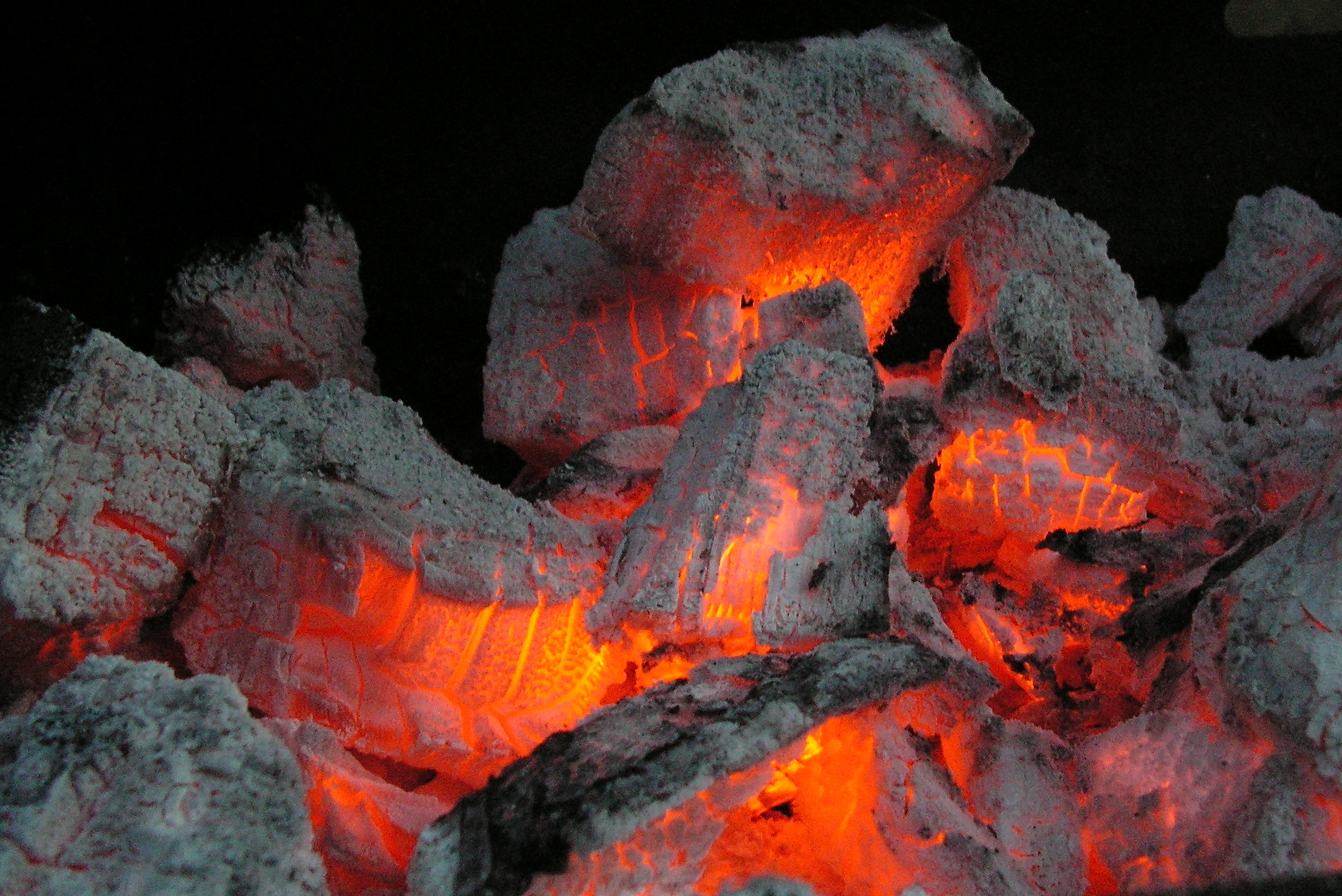
The nature's sport that Rev. Wilton was referring to is the smouldering combustion of a coal seam. The Burning Mountain is the best example of this natural phenomenon that slowly burns the underground coal when it becomes exposed to atmospheric air.  Smouldering is the slow, low-temperature, flameless burning that represents the most persistent type of combustion phenomena and leads to the largest and longest burning fires on Earth. This Australian coal seam started to burn more than 6,000 years ago, some scientists think more than 500,000 years ago. At least the British cannot be blame for it.

The fire is burning now about 30 m below ground. At a rate of 1 m per year, the fire has reached the top of the hill (shown in Figure 3). Because of the creeping spread rate, the slow and intense heat has created a landscape clear of any vegetation in an area 50 m around the hill top. The soil shows a beautiful colour palette of white sinter, yellow sulphate, black char and red iron oxide. Where the fire and heat has not reached yet, a healthy green forest of mature and tall trees can be seen on brown soil. Along the former trail of the fire path, the forest grows back slowly, and young and smaller trees can be seen on red soil. Once at the hilltop, it is easy to feel the hot combustion gases and the smell of sulfur released from multiple deep cracks. The site is surrounded by cracks, some are up to 0.5 m wide, which are more visible ahead of the fire than behind it. Further from the active site by about 20 m, the cracks do not emit gases which to me indicates that the airflow direction is into the seam, feeding the fire with vital oxygen.

Figure 3. The fire has now reached the top of the second hill, where the soil is also a multicolor palette of white sinter, yellow sulphate, black char and red iron oxide.
Some of the most interesting observations that the visitor can do are visually inspections of the trail the fire has left in the area as it has spread for centuries. The entry to the walking track is from the New England Highway, about 1km North of the current fire location (Fig 4). As the visitor walks in from the parking lot, the track goes up to the tallest of the two contiguous hills. Near the hill top, the visitor meets the first clear signs of the fire trail, and then the track follows it chronologically. The fire was burning below the hill top circa 1500s (my estimate). One can see a clear change to less dense vegetation, soil of a strong red colour and more large rocks on the ground. Then, the track goes down a few dozen meters to the saddle point between the two hills and then up to the current fire site. This saddle point is close to where the fire was when it was reported first and confused for a volcano in 1828. I think that the lower ground elevation at the saddle point means the distance between the free surface and the burning seam was at a minimum. Hence, I infer than the much increased air supply contributed to the ferocity of the burning and the plume of smoke ought to have been majestic. The depth to the seam might have been short enough that the coal walls could be seen glowing red. Lava they thought?. This would be nothing compared to the faint hot gases released now that the fire is again at a hill top and more than 30 m deep.


Fig 4. Google maps of the reserve showing the approximate track and the current location of the fire at the top of the second hill.

 An interesting observation that I could make during my visit is that after the hilltop, the forward path of the fire, just 20 m away, is on a very steep fall of 100 m down to the bed of a small river. If the coal seam is running just under the river, the fire could reach again massive proportions as in 1828. Or it could be that the coal seam does not continue after the hill top, and that the fire will naturally extinguish itself within my lifetime after more than 6,000 years burning. Either way, what a lucky historical coincidence for me to witness it happening. I will not miss another visit in the next decade.

The Burning Mountain is just one example. Thousands of underground coalmine fires have been identified around the world, especially in China, India and USA. Elusive, unpredictable and costly, coal fires burn indefinitely while there is fuel, choking the life out of a community and the environment while consuming a valuable energy resource. The associated financial costs run into millions of dollars including the loss of coal, closure of coal mines, damage to the environment and fire-fighting efforts. There are other well-documented cases like when in 1962 an abandoned mine pit in Centralia, Pennsylvania, USA was accidentally lit. Many unsuccessful attempts were made to extinguish it, letting the fire continue to burn until today after more than forty years. Geologist estimate that there is fuel for 250 years more of fire.


Recommended reading (and viewing) on smoldering fires:
  • Abbott, W.E., 1918. Mt. Wingen and the Wingen Coal Measures. Angus & Robertson, Sydney. http://trove.nla.gov.au/work/21299713
  • Mayer, W. , 2009, Geological observations by the Reverend Charles P. N. Wilton (1795 -1859) in New South Wales and his views on the relationship between religion and science, Geological Society, London, Special Publications 310, p197-209. http://dx.doi.og/10.1144/SP310.20
  • Smouldering, Wikipedia, http://en.wikipedia.org/wiki/Smouldering
  • Smouldering Fires and Natural Fuels, by Guillermo Rein, Chapter 2 in:
    Fire Phenomena in the Earth System – An Interdisciplinary Approach to Fire Science, pp. 15–34, Wiley and Sons, 2013. http://dx.doi.org/10.1002/9781118529539.ch2
  • Stracher, G.B., Prakash, A. & Sokol, E.V. (eds) (2010) Coal and Peat Fires: A Global Perspective, 1st edn; vol. 1: Coal – Geology and Combustion. Elsevier Science. 
  • Pennsylvania's 50-Year-Old Coal Fire by SciShow. www.youtube.com

Tuesday, 8 April 2014

G3E4O Geoengineering and the Engineers of Gaia

Earthrise seen by the Apollo 8 crew, 1968. Credit: NASA
Blog by Nils Roenner and Guillermo Rein, Department of Mechanical Engineering at Imperial College London.


Because of global concerns on climate change, engineers are called to have a leading role in tackling the problem, and a new discipline is being proposed: Geoengineering (G3E4O(IN)2R).
The realisation that man has an impact on Earth has led to the idea of the Anthropocene which signifies the current geological epoch, ‘the recent age of man’. Humans are being viewed as a factor and intricate part of nature. This is in agreement with Dr Lovelock’s Gaia hypothesis, introduced in 1979, a revolutionary view of the Earth not as a simple accumulation of systems but as one self-regulating system encompassing everything, including life.
Sketch of the Earth as system of systems with interdependencies and feedback lines outlined. Adopted from Rial et al. 2004 (10.1023/B:CLIM.0000037493.89489.3f).
In an article we wrote in 2013, The Engineers of Gaia, by using the concept of Gaia and the Anthropocene as starting points, we argue that the control system view of Earth is a vital part of geoengineering. It is not about one mechanism, it is about the self-regulating system as a whole. But if geoengineering was to apply a forcing too large or at the wrong place, such that positive feedback loops overtake, the results could be drastic and unpredictable. Careful and robust control is required when engineering something as vital as the system Earth, and this argument is often invoked to stop geoengineering proposals. Paraphrasing Prof Henry Petroski, for us, the premise would be that geoengineers welcome all the relevant science they can muster, but cannot wait for complete scientific understanding before acting to save life or create a new planet-saving technology. We also maintain that up until the moment when adequate understanding and models of the system are found only reversible and well controlled geoengineering interventions should be applied on a large scale, in order to prevent uncontrollable feedback being set off or reaching tipping points by accident.

The term geoeneering has only recently gained traction in the public debate, and its definition still varies according to the source. We think this can be defined as the large-scale anthropogenic intervention into the system Earth in order to adjust planetary mass and heat transfer processes, such that global catastrophes can be mitigated. Geoengineering opens up a broad range of measures with which global climate change can be tackled. No geoengineering approach should be viewed as a single solution to all of the problems associated with climate change. Most likely a combination of approaches will yield long term success. 

Our article briefly evaluates four promising applications of geoengineering using a set of criteria by which geoengineering proposals can be evaluated in term of feasibility, effectiveness, safety, geointervention, and costs.  These are summarized here:

Carbon Capture and Storage is a good option for rich countries aiming at reducing its CO2 emissions from power plants. Apart from its high cost, this method is very feasible and effective with low levels of geointervention and risks.

Biomass Burial is a good option for countries that have suitable and extended land. It is a lower cost approach and can be scaled up to have a larger impact. Low cost, feasibility, effectiveness and low levels of geointervention speak in favour despite some risks, like fire, which need to be managed.

Iron Fertilisation of oceans is an option for countries with coastal access. The low cost involved and the proven feasibility make this method appealing. But concerns about low effectiveness, high level of geointervention and high risks question the validity of the approach.

Cool Roofing of Building is a good approach for densely populated areas or countries with high annual level of sunshine. The low cost, risks and level of geointervention of this feasible option are attractive but on the other hand, it has a weak effectiveness and cannot control secondary effects.

Illustration of the strengths and weaknesses of the proposals under study.
It can be said for all geoengineering proposals, that due to our incomplete understanding of all feedback and threshold points in the global system of the Earth, the topic has to be approached with great caution. But its potential in helping to solve the great problem of climate change, make the efforts put into research and experiments worthwhile.


Thursday, 5 July 2012

Geoengineering and Burt Rutan - The Economist

Letter to the Editor of The Economist sent on 6 of June 2012.

----


Dear Sir,

SpaceShipOne (designed by Mr Rutan)
at the National Air and Space Museum, Washington D.C.
Photo from wikipedia.
In your last Brain Scan article ("A maverick in flight", Technology Quarterly, June 2012) on the accomplishments of Burt Rutan, a pioneering and unconventional aerospace engineer, I find entertaining how Mr Rutan uses acrobatics to announce that global warming will lead environmentalists into an engineering breakthrough. He refers to unprecedented global warming and the tipping point for atmospheric carbon dioxide as "it’s just nonsense".

But this might not be a pejorative term for him. The statement is followed by the clarification:
 "You run into them [breakthroughs] when you’ve found something that doesn’t make sense and you find a way to make it work".

Maybe he is announcing the arrival of geoengineering. I would approve.

Best Regards,

-
Dr Guillermo Rein
Senior Lecturer in Mechanical Engineering
Imperial College London
http://www.eng.ed.ac.uk/~grein

Tuesday, 13 September 2011

Accidental Burning of Fossil Fuels

(aka, Accidental Emissions from Fossil Fuels)
Next week, I will present at the Royal Academy of Engineering a brief poster summarizing the work that I have developed with the generous funding of the RAEng/Leverhulme Fellowship. The poster is here (pdf). A related seminar I gave at UC Berkeley in July can be watched in youtube here (and see at the end of this post). The following reproduces the content of the poster:

World energy use and climate change science have led to concerns on sustainability, man-made burning of fossil fuels, and carbon emissions. Most attention is paid to energy efficiency, clean technologies and new resources. But unintentional and non-anthropogenic sources contributing to the problem have been ignored. Smouldering megafires, the largest and the longest-burning fires on Earth (>6,000 years), take place in all continents except Antarctica, and burn fossil fuels accidentally.

Smouldering of carbonaceous media (flameless combustion) is the most persistent fire phenomenon on Earth. Photo by Jens Buurgaard Nielsen (wikipedia).
Very large smouldering fires of carbonaceous natural media (coal seams and peatlands) have burnt since past millennia for long periods of time (months, years, decades). Peat fires burn during the warm/dry season in Indonesia, Canada, Russia, and USA. Hundreds of coal fires continuously burn in USA, China and India. Globally, the problem has grown to a current carbon release equivalent to 10-30% of man-made emissions, and a coal consumption rate five times faster than that of Germany.

Oct 1997: aerosol imaging by NASA TOMS shows the vast smoke haze released by smouldering peat fires in Indonesia. Photo by NASA.
Smouldering phenomena involve the burning of fossil fuels and are carbon-positive. This creates a positive feedback mechanism in the climate system: Moisture deficit and self-heating of carbonaceous media are enhanced under warmer climates and lead to more frequent smouldering fires. Warmer temperatures at high latitudes are already resulting in large smouldering fires in the Arctic (e.g., Alaska 2010).


Positive feedback by smouldering fires in the climate system (topics I study are represented by red arrows)

Stopping these fires is an engineering task at the Earth-scale. RAEng states that “geoengineering provides options in which the Earth’s climate is deliberately manipulated to offset the effects of global warming due to increasing levels of greenhouse gases”. I am contributing to this through the study of the ignition, spread, emissions, and suppression of smouldering phenomena. I aim to develop both fundamental understanding and technological solutions to this problem.


Accidental Burning of Fossil Fuels (RAEng 2011)