Showing posts with label peat. Show all posts

Thursday, 3 December 2015

Tackling the haze in South-East Asia: a call to COP21 Paris

Reprint of my original article published first in the blog of The Grantham Institute.

Peat fires are raging in Indonesia and their extent is staggering. The dry season is not over and NASA satellites have already counted more than 12,000 active fires, which have emitted in excess of 1.6 Gton of carbon dioxide equivalent. This is more than Japan’s annual emissions and close to the footprint of the whole of India. In fact, if peat fire emissions were considered, Indonesia would be the 4th highest emitting country in the world. With COP21 climate negotiations on carbon emissions due to start in just over a week, this widespread haze is choking the population and fauna.

Driven by energy goals and climate change, international efforts are moving towards reducing anthropogenic greenhouse gas emissions and limiting the burning of fossil fuels. However, by ignoring smouldering fires, a major source of greenhouse gases is being overlooked.

The long slow burn

Smouldering fire is a natural phenomenon that burns Earth’s organic-rich deposits, primarily peatlands, soils and coal. Sometimes termed smouldering megafires, these are the largest and longest burning fires on Earth and take place not only in Indonesia, but also in Siberia, Alaska, Florida and Australia to name a few.

Peat megafires destroy essential peatland ecosystems, and release huge quantities of carbon dioxide, carbon monoxide and methane, making up 15% of annual global greenhouse gas emissions. This is the same amount attributed to the whole of the European Union, or all the vehicles worldwide – and yet it is not accounted for in global carbon budgets.

Moreover, the burning of deep peat affects older soil carbon that has not been part of the active carbon cycle for centuries to millennia, and thus creates a positive feedback to the climate system (see Figure 1).
Figure 1. The peat fire problem at the Earth scale, including climate feedback. By G Rein, CC BY 3.0 license

Why so large?

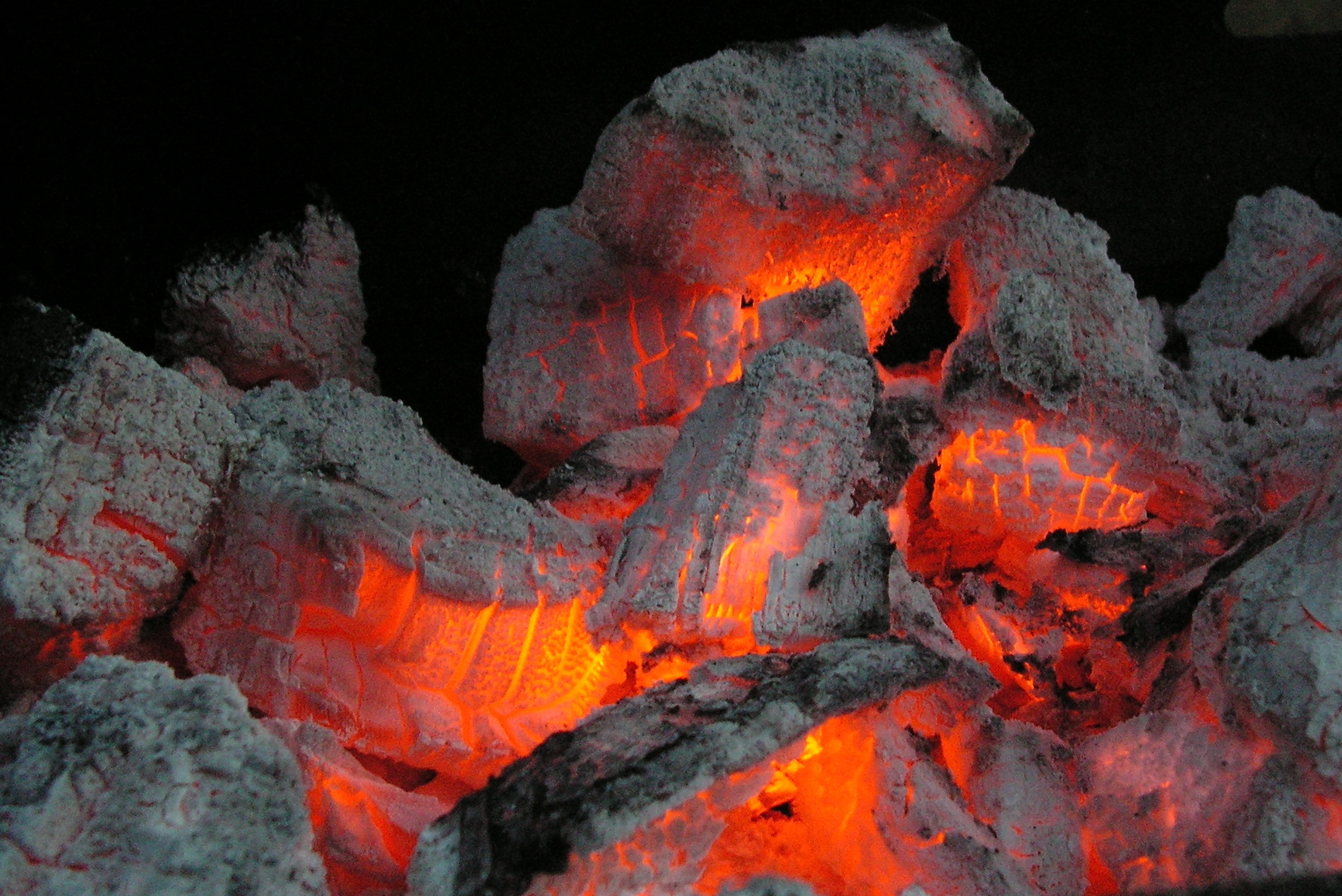
Smouldering combustion is the slow, low temperature, flameless burning of porous fuels. It is sustained by the heat released when oxygen directly oxidises the carbon on the surface of organic soil particles. Once ignited, subsurface organic layers such as those in peatlands or carbon-rich soils burn slowly for long periods of time, spreading deep into the ground and over extensive areas.

Possible ignition events can be natural (e.g. lightning, self-heating, volcanic eruption) or anthropogenic (land management, accidental ignition, arson). Smouldering fires can be initiated by weak sources of ignition and are typically the most difficult to extinguish. Smouldering suppression requires much larger amounts of water than extinguishing flaming fires (it requires actual flooding of the land).

Easy ignition and difficult suppression make smouldering fire the most persistent type of combustion phenomenon on Earth. These fires burn for very long periods of time, lasting months, years, or even decades, despite extensive rains, weather changes and fire-fighting attempts. Peat fires have been active in Indonesia this season for the last more six months or more. They have become endemic in some areas of the world.


Figure 2. Visual and overlaid infrared imaging of radial smouldering spread over a sample of peat ignited at the centre. Photo by Rackauskaite, Huang and Rein (CC BY 3.0 license) http://blogs.egu.eu/divisions/sss/2014/10/01/soils-at-imaggeo-fire-watch-constellation


The Triple Challenge

Given the scale of the problem, relatively little action is being taken. I have identified three major challenges hampering global action:

Challenge #1 – Scientific understanding is poor: There are still large gaps in our knowledge of how smouldering fires ignite, spread or extinguish, which impedes the development of any successful mitigation strategy. Poor scientific knowledge on smouldering even leads to fatal misunderstandings and confusion between flaming and smouldering combustion.

Challenge #2 – Non-existent mitigation technologies: Smouldering megafires are routinely fought across the globe with techniques that were developed for flaming fires. These techniques are ineffective for smouldering fires because the heat transfer and the chemistry involved are completely different. For instance, aerial tankers do nothing to stop smouldering fires because flooding is required instead, and satellite monitoring substantially underestimates the size of peat fires because smouldering can spread underground.

Challenge #3- Topic fragmented among scientific disciplines: Smouldering megafires are an intrinsically multidisciplinary theme requiring collaboration by combustion scientists, ecologists, atmosphere scientists and biochemists.

These three challenges must be overcome before effective mitigation strategies can be implemented. While the largest fires on Earth continue releasing naturally stored carbon into the atmosphere, we are failing to protect both people and the planet.

A Call to Paris

We can reduce the worldwide burden of smouldering megafires and create new technology drivers by pursuing greater experimental understanding and up-scaling our research in the field.

Science is an essential enabler of understanding of peat fires. By strengthening the importance of fundamental knowledge and by consolidating the disciplines interested in the phenomenon, I believe combustion science will serve as the basis for tackling wildfires.

COP21 in Paris has the chance to mobilise the resources needed to advance the science that can lead the way and pioneer technologies against this Earth-scale but unconventional source of emissions.

Further Reading

Thursday, 22 August 2013

Distinguished award for peat fire paper


I am delighted to announce that our peat fire paper has received the 2013 Distinguished Paper Award on Fire Research at the 34th International Symposium on Combustion. This research award is given biannually by the Combustion Institute.

The work studies the chemistry of smouldering combustion of peat. Peat fires, like those causing haze episodes in South East Asia, are the largest fires on Earth but a poorly understood, yet extensive source of greenhouse gases, and are emerging as a hot topic in climate-change mitigation. These novel combustion experiments provide the framework to study smouldering dynamics by carefully varying the controlling mechanisms and providing burning conditions that otherwise cannot be obtained.This multidisciplinary paper merges the fields of combustion and geoscience, and serves as an example of mechanical engineering contributing to understand Earth-science disciplines like ecology, biodiversity, and biogeochemistry.

Thursday, 6 September 2012

Chemistry of peat fires

Proceedings of the Combustion Institute
NOTE: This paper received the Distinguished Paper Award on Fire Research at the 34th International Symposium on Combustion by The Combustion Institute.


We have just published a paper in the Proceedings of the Combustion Institute on the chemistry of smouldering peat:

 "Study of the competing chemical reactions in the initiation and spread of smouldering combustion in peat" http://dx.doi.org/10.1016/j.proci.2012.05.060

Smouldering is the slow, low-temperature, flameless burning that represent the most persistent type of combustion phenomena and which leads to the largest and longest burning fires on Earth. Smouldering megafires in peat and coal deposits occur with some frequency during the dry season or eventual droughts in, for example, North America, Siberia, the British Isles, the subartic and South-East Asia.

In this work, we use an experimental methodology to study the smouldering combustion of samples of peat under a wide range burning conditions. By varying the oxygen concentration and the ignition conditions we investigate the competing pyrolysis and oxidation reactions.

We focused on the three main solid species involved in smouldering fires: peat, char and ash . It shows clearly how pyrolysis concentrates carbon in the char while a large fraction of the hydrogen is released, while the oxidation releases most of the carbon and concentrated the minerals in the ash which H, C and N contents are negligible. The fraction of carbon in char is ~1.5 times higher than in peat, and ~35 times higher than in ash. The change is even greater in terms of carbon density, it increases from 77 kg-C/m^3 in the peat to 133 kg-C/m^3 in the char, to then sharply drop to 0.7 kg-C/m^3 in ash.

The experiments clearly show that there are pyrolysis and oxidation reactions. Char is formed by pyrolysis and consumed by oxidation. So at the beginning of a test there is no char, and at the end only a small amount of char remains, but in between substantial amounts of char (~50% of initial weight) were momentarily formed. Smouldering produces and consumes its own char: it initially produces char through pyrolysis before being consumed by char oxidation reactions. The competing nature of the production and consumption char reactions has been experimentally shown (see figure below).

 Evolution of peat and char fractions through an experiment.

The virgin peat reacts during the first 15 min to produce char and ash. Thereafter, only char reactions take place producing ash. Tracking the amounts of peat and char at any given time shows that first char is formed. It reaches a maximum fraction (~50% of the initial mass) in 20 min and then slowly the char is consumed down to ash (10% mass). At the end of the experiment, 90% of the initial mass has been released as gases, leaving a void and a thin layer of ash.

By varying the oxygen concentration and the thermal conditions we investigate the competing pyrolysis and oxidation reactions at a fundamental combustion level. The figure below shows infrared images of the surface of samples at different oxygen levels (21% is normal air) during the early burning stages of ignition (5 min after first heat exposure). As the oxygen level is increased, the temperature of the sample surface increases (indicated by brighter colour) showing that although pyrolysis dominates in this early stages of spread, oxidation reactions also play a role.

 Infrared images of the sample at [O2] of 17%, 21%, 25% and 35%just 5 min after first heat exposure.


The results presented here can be used to advance our fundamental knowledge of large-scale smouldering wildfires which are currently not well understood.

 --
Title: "Study of the competing chemical reactions in the initiation and spread of smouldering combustion in peat"
By: Hadden, Rein and Belcher In: Proceedings of the Combustion Institute (in press), 2012. http://dx.doi.org/10.1016/j.proci.2012.05.060

Wednesday, 25 July 2012

Interview on the accidental burning of ancient carbon

I have been interviewed for GeoLog, the blog of the European Geoscience Union (EGU):

Geotalk: Dr Guillermo Rein


It  features my research on smouldering combustion, the largest fires on Earth and the accidental burning of ancient carbon. It is released as the first interview in the new monthly blog column called Geotalk, featuring short interviews with scientists about their research.

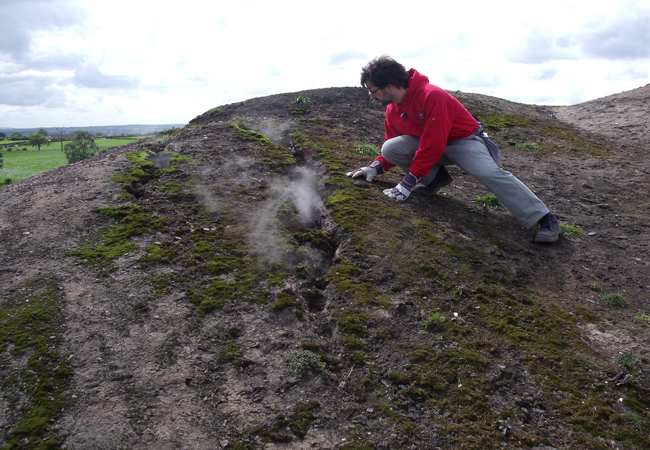
Dr Rein next to a water vapour vent on top of the 30m-high Bogside bing, near Glasgow, Scotland. This bing is a man-made hill of mining waste, and started to smoulder in 2009, approximately 80 years after the closure of the pit. The spread of the combustion is accompanied by the development of vents ahead of the front. (Image by Dr Ricky Carvel and Dr Guillermo Rein, distributed under a CC BY-SA Creative Commons licence)

Friday, 20 July 2012

Smouldering fire of organic soil in Oregon National Wildlife Refuge


The dry organic soil in Malheur National Wildlife Refuge has ignited and several smouldering hot spots have been burning since last week. They were started by the flaming Miller Homestead wildfire on the evening of July 12 but the smouldering fire is now slowly self-spreading.

Suppression attempts are under way by the Fire Service including local flooding and compartmentation. It is essential to act quickly. Under dry conditions as the ones currently present in Oregon, smouldering fires can last for months, releasing large quantities of old carbon stored in the soil.

Smouldering organic soil after the Miller Homestead Wildfire moved onto the refuge the evening of July 12. Photo Credit USFWS.


Monday, 16 July 2012

Workshop on Smouldering Wildfires and The Earth System


I Workshop on Smouldering Wildfires and the Earth System

at University of Edinburgh, King's Buildings

Fri 27 July 2012, from 9am to 1:30pm.


Taking advantage of the visit of a few brilliant researchers working on smouldering wildfires, I am organizing a small workshop on the topic for Friday 27 July to bring together fire dynamic, engineering and geosciences. Small, but the first of its kind. It is focus mostly on peat lands, but other ecosystems and fuels are welcome (eg, coal, organic soils, litter). All are invited (no fees), and interdisciplinary backgrounds and topics are specially welcome. If you want to attend or give a talk, please send me an email to G.Rein@imperial.ac.uk.

Some smouldering peat experiments will be conducted in the lab on Thursday afternoon. Workshop attendees are invited to join us to witness/help with the tests.

See google map here to the venue, Seminar room in the 3rd floor of Alexander Graham Bell Building, University of Edinburgh, King's Buildings campus.


http://www.imaggeo.net/view/642
"Smouldering fires, the slow, low-temperature, flameless burning, represent the most persistent type of combustion phenomena, and leads to the largest and oldest fires on Earth. Indeed, smouldering megafires of peat occur with some frequency in for example North America, Siberia, the British Isles and South-East Asia during the dry session. Smouldering fires propagate horizontally and vertically through organic layers of the ground and can reach very deep where large cracks or natural piping systems exist. This threatens to release ancient carbon stored deep into the soil. Once ignited, they are particularly difficult to extinguish despite extensive rains, weather changes, or fire-fighting attempts, and can persist for long periods of time (months, years, or even centuries), spreading into the ground and over extensive areas." from the chapter Smouldering Fires and Natural Fuels, 2013, written by G Rein for an incoming Wiley book "

Fire Phenomena in the Earth System – An Interdisciplinary Approach to Fire Science".


UPDATE: Incidentally, I have just been interviewed for GeoLog, the blog of the European Geoscience Union, on smouldering fires and accidental burning of ancient carbon.


Final Programme (click on title to see pdf of presentation slides):

- Dr Guillermo Rein from Imperial College London (UK) to give an overview of smouldering fires on the Earth System.
- Dr Rory Hadden from University of Western Ontario (Canada) to talk about carbon emissions from smouldering fires.
- Dr Matt Davies, University of Glasgow (UK) to talk about peat fires and ecology in Scotland.
- Dr Adam Watts from University of Florida (USA) to talk about the role of fires in tropical wetlands.
- Nuria Prat from University College Dublin (Ireland) to talk about postfire effects of smouldering peat in a boreal pine forest.
- Dr Haixiang Chen from State Key Laboratory of Fire Science (China) to talk about computational modelling of smouldering fire.
- Dr Jon Yearsley from University College Dublin (Ireland) to talk about celullar automata modelling of peat fires.
- Keith Torrance from University of Strathclyde (UK) and University of Alaska (USA) to talk on smouldering coal heaps in Lanarkshire, Scotland.
- Dr Christine Switzer  from University of Strathclyde (UK)  to talk about the chemical and physical changes induced by smouldering on inert soil samples.

Monday, 24 October 2011

Smouldering and self-sustaining reactions in solids: an experimental approach

I am delighted to announce that the PhD thesis of my student Rory is now online:

Smouldering and self-sustaining reactions in solids: an experimental approach (clik on title for pdf)
by Rory Hadden, PhD, University of Edinburgh, 2011 

The Ostedijk on 21st February (the 5th day) after
the hold was opened and before specialized firefighting activities had
commenced. Derived from photograph courtesy of Agencia EFE.
Abstract: Smouldering combustion governs the burning of many materials in the built and natural environments. Smouldering is flameless, heterogeneous combustion which occurs when oxygen reacts with the surface of a solid fuel. Understanding the conditions which will result in the ignition and smouldering of a porous fuel is important and the phenomena involved are complex and coupled, involving heat and mass transfer, and chemical kinetics. This thesis reports experimental studies of the ignition, spread, suppression and emissions from reactions in porous media. Similar experimental techniques are shown in this thesis to be applicable when studying a wide range of solids which undergo self-sustaining reactions. This thesis is presented in a manuscript style. Each chapter takes the form of an independent paper which has been prepared for journal publication and as such, each chapter can stand on its own as a piece of research. A final chapter summarizes the findings and conclusions and suggests further areas of research.
The evolution of char and peat fractions throughout the
experiment and the mass loss rate. The fraction of peat decreases and
the fraction of char increases from the beginning of the experiment until
around 20 min. During this period, the pyrolysis front is propagating
through the sample, resulting in the formation of char from the thermal
decomposition of peat. After 20 min, the pyrolysis front has propagated
through the sample and the resulting char is undergoing oxidation to
form ash and gaseous products. Error bars represent the average error
from three repeats.


Chapter 1 presents a study of self-sustaining decomposition (SSD) of NPK ammonium-nitrate-containing inorganic fertilizer. Findings were applied to the events that occurred aboard the Ostedijk in 2007.

Chapter 2 is a study of smoulder in polyurethane foam to study the relationship between sample size, critical heat flux and spread rate. This is important becuase smouldering fires are the leading cause of residential fire deaths in developed countries and polyurethane foam is ubiquitous in the modern world.

Chapter 3 presents an experimental investigation into the ignition of porous fuels by hot particles. This is related to the problem of spotting ember ignition in wildland fires which is a major, but poorly understood, spread mechanism. The process of spotting occurs in wildland fires when fire-lofted embers or hot particles land downwind, leading to ignition of new, discrete fires.

Chapter 4 is an investigation into the suppression of smouldering coal. Subsurface coal fires are a significant global problem with fires in China alone estimated to consume up to 200 million tons of coal per year. As global demand for coal increases, accidental fires are a waste of a useful energy resource as well as a source of pollution and greenhouse gases. The results are the first attempt reported in the literature to study the suppression of these fires under controlled laboratory conditions.


The mass flux of CO (red) and CO2 (blue) for experiments
in which flaming was ignited using a pilot flame (solid) and where
only smoulder was observed (dashed). The shaded region represents
the duration of the flaming. The inset details differences in emissions
during the period of flaming.
Chapter 5 presents an experimental investigation of the smouldering behaviour of peat. This is of particular interest in understanding the impact of smouldering fires on the earth system. The longer burn durations and different combustion dynamics of smouldering compared to flaming means that they have been shown to consume large amounts of biomass in, and contribute significantly to the emissions from, natural fires occurring in peatlands. The dynamics of smouldering peat in shallow, strong fronts was studied in the Fire Propagation Apparatus and a smoulder reaction framework with two burning regimes is presented.

Chapter 6 complements Chapter 5 with an analysis of the CO and CO2 emissions for smouldering and flaming peat. This data can be used with large-scale measurement techniques to improve emission estimates. The emissions are found to be dependent of the burning regime and the type of combustion with flaming resulting in higher fluxes of CO2 and lower fluxes of CO compared to peat smouldering. The large majority of emissions (85% of CO2 and 97% of CO) are released during the smoulder phase of the reaction. This highlights the differences in the chemical processes occurring under these two modes of combustion.

Chapter 7 summarizes the research undertaken in this thesis and presents possible further work.

Tuesday, 13 September 2011

Accidental Burning of Fossil Fuels

(aka, Accidental Emissions from Fossil Fuels)
Next week, I will present at the Royal Academy of Engineering a brief poster summarizing the work that I have developed with the generous funding of the RAEng/Leverhulme Fellowship. The poster is here (pdf). A related seminar I gave at UC Berkeley in July can be watched in youtube here (and see at the end of this post). The following reproduces the content of the poster:

World energy use and climate change science have led to concerns on sustainability, man-made burning of fossil fuels, and carbon emissions. Most attention is paid to energy efficiency, clean technologies and new resources. But unintentional and non-anthropogenic sources contributing to the problem have been ignored. Smouldering megafires, the largest and the longest-burning fires on Earth (>6,000 years), take place in all continents except Antarctica, and burn fossil fuels accidentally.

Smouldering of carbonaceous media (flameless combustion) is the most persistent fire phenomenon on Earth. Photo by Jens Buurgaard Nielsen (wikipedia).
Very large smouldering fires of carbonaceous natural media (coal seams and peatlands) have burnt since past millennia for long periods of time (months, years, decades). Peat fires burn during the warm/dry season in Indonesia, Canada, Russia, and USA. Hundreds of coal fires continuously burn in USA, China and India. Globally, the problem has grown to a current carbon release equivalent to 10-30% of man-made emissions, and a coal consumption rate five times faster than that of Germany.

Oct 1997: aerosol imaging by NASA TOMS shows the vast smoke haze released by smouldering peat fires in Indonesia. Photo by NASA.
Smouldering phenomena involve the burning of fossil fuels and are carbon-positive. This creates a positive feedback mechanism in the climate system: Moisture deficit and self-heating of carbonaceous media are enhanced under warmer climates and lead to more frequent smouldering fires. Warmer temperatures at high latitudes are already resulting in large smouldering fires in the Arctic (e.g., Alaska 2010).


Positive feedback by smouldering fires in the climate system (topics I study are represented by red arrows)

Stopping these fires is an engineering task at the Earth-scale. RAEng states that “geoengineering provides options in which the Earth’s climate is deliberately manipulated to offset the effects of global warming due to increasing levels of greenhouse gases”. I am contributing to this through the study of the ignition, spread, emissions, and suppression of smouldering phenomena. I aim to develop both fundamental understanding and technological solutions to this problem.


Accidental Burning of Fossil Fuels (RAEng 2011)

Friday, 2 September 2011

Smouldering wildfire burning in New Orleans

The organic soil of Loiusiana marshes near New Orleans is smouldering in at least two separated locations. The fire continues to slowly spread after several days, and the smoke is now affecting town up to 160 km away. The Louisiana National Guard has been called in to help in the suppresion.

Smouldering fires of organic soils like peat burn underground and are the most difficult fire pheonmena on Earth to extingish. The top firefighter in Loiusiana said it better: "Once it’s underground, it’s next to impossible to fight. You can’t bring enough water to wet down that soil".

And note that the same article where the coment was made, report that the smouldering peat fires are still smouldering in the Great Dismal Swamp even after the arrival of hurricane Irene!


Friday, 26 August 2011

Cut or not cut peat? but never let it burn accidentally

Prof Ian Rotherham, ecologist and landscape historian at Sheffield Hallam University, has written a letter to The Telegraph "Peat cutting must be regulated, not banned". He argues for "enlightened management of peat resouces". The process of peatlands restoration must continue. But he notes that this could be combined with traditional uses as domestic fuel; "we can allow the traditional peat fire to glow gently in the cottage hearth as it has done for centuries".


The debate of protecting human heritage vs. protecting precious ecosytems is a valid one. And it must continue. But often, in fact by far most of the time, more attention is given to the delirebate burning of small quantities of peat for domestic use than to the accidental and unintended burning of peatlands. This are the largest and the longest burning fires on Earth. Some are biogenic. Examples are abundant (for example in UK, Russia, USA and Indonesia). These fires have been burning since past millennia for long periods of time (weeks or months), and consume large amounts of biomass. Smouldering fires consume 50 to 100 times more biomass per unit area than flaming wildfires. The global problem has grown to a current carbon release equivalent to 10-40% of man-made emissions.

Cut or not cut peat, I do not know, but never let it burn accidentally.

Monday, 1 August 2011

Quenching the Reactive Earth - talk given at UC Berkeley

Quenching the Reactive Earth - Accidental Burning of Fossil-Fuels and Geoengineering

I recently gave a research seminar at the Department of Mechanical Engineering at the University of California where I presented some of my research ideas. I start by summarizing my academic career to date and then proceed to talk about smouldering mega fires of natural coal and peat deposits. I have termed these "accidental burning of fossil-fuels".

Sunday, 10 July 2011

Smouldering mega fires are back in Russia: burning peat

Remember the Russian wildfires last summer that choked the city of Moscow and other regions? These were smouldering mega fires burning for several weeks and caused by the slow burning of dry peatlands. See here for an introduction to smouldering combustion.

Unfortunately, they are back this summer. Last week, they were several flaming fires burning in the region of Moscow. After flames were extinguished, the peat was seen to smoulder. Given the pollution, environmental and climate disaster that the smouldering mega fires brought last summer, the worry is that they might burn for months in 2011 as well. Given the extreme difficulty of suppressing smouldering fires when these have already grown out of proportions, the Fire Service is afraid that the fate might be in the hand of the rain.

In the meantime, Greenpeace reported about 20 peat fires in Russia.

PD: There are currently smouldering mega fire burning in North Carolina, Georgia and Indonesia.

Friday, 17 June 2011

Smouldering mega fire in North Carolina Wildlife Refuge

A peat fire has been burning in North Carolina since May 4 inside the Alligator River National Wildlife Refuge. It is only 75% contain so far, and the higher summer temperatures are arriving fast. It could burn for several more months.

It is believed to had started with a lightning strike [ref]. A recent local article reports "crews pump millions of gallons of water on stubborn ground fire that is part of the larger Pains Bay fire"


This brings reminisces of the 2008 Evans Road fire in the Pocosin Lakes National Wildlife Refuge (NC, not far from Alligator River National Wildlife Refuge). The initial flaming fronts were controlled within days, but the smouldering fire burned for 6 more months and consumed the organic soil down to 1 m deep (see hanging tree in the 2008 photo). 16000 ha were destroyed (2 times the year average for North Carolina). More than 400 firefighters stopped this smouldering mega fire by flooding and excavating the peat. Estimated costs in suppression alone are near $20 million. It was also believed to had started with a lightning strike.


Note that as opposed to flaming fires of forest land that can regrow in 50 to 100 years, peat is a pre-fossil fuel (or ancient carbon as Andy Revkin labelled in his twit), it takes >10,000 year to form. Thus peat fires are a net source of carbon emissions and provide a positive feedback to climate change. This accidental fossil-fuel burning taking place now releases carbon that will not be recaptured by new peat until the year 12011. By then, the Earth climate system had plenty of time to response and lead to a possible global change. I discussed this a recent talk I gave at the last European Geoscience Union, see previous blog entry here and insert below. The title was "Climate Feedbacks on Smouldering Earth".

Climate Feedbacks on Smouldering Earth (talk at EGU Vienna 2011)

Monday, 16 May 2011

The park that came back from the dead

I was quoted in the article that The Independent published last Saturday on Spain's wetlands National Park Las Tablas de Daimiel:


The park that came back from the dead

The article quotes some of my comments published in the 2010 interview for El Pais. They said Guillermo Reim, but sure the meant Rein :).

The article summarizes the recent story of the park, from being completely dry due to 5-year drought, to the initiation of smouldering peat fires in summer of 2009, and then to sudden massive rain floods that arrived in early 2010. Now the Park is beautiful. See above a photo-comparison that I made; Nov 2009 vs. Aug 2010. But for how long will the park be flooded as is its natural state? No one knows for certain, and most politicians are not interested in the issue.

Tuesday, 10 May 2011

Wildfires UK and interviews in the BBC and LBC Radio

The unusual warn and sunny weather spell that we have been enjoying recently over most of the UK has unfortunately led to an intensification of wildfires.

Because of the sudden media attention on the topic, on 4 May I was interview by BBC Radio Wales about wildfire dynamics. You can listen to the audio here. Minutes after, I was interviewed by Nick Ferrari in LBC Radio (97.3).

The worst is about to come if the dry weather continues and the peat dries. Dry peat can ignite easily. Smouldering peat fires are the most devastating fires in the Earth system, and can be linked to climate change.

NOTE: This was the second time I talked to Nick Ferrari in LBC Radio. I talked to him on 19 April about the possible ignition sources of the scrapyard fire in London that led to closure of the M1 road.

Wednesday, 6 April 2011

Oral presentation at EGU: Climate Feedbacks on Smouldering Earth

Yesterday 6 April, I gave this talk on Climate Feedbacks on Smouldering Earth at the 2011 European Geosciences Union, Vienna:

Climate Feedbacks on Smouldering Earth (talk at EGU Vienna 2011)

Abstract:

Climate Feedbacks on Smouldering Earth: Enhancement of Moisture deficit and self-heating of fossil and pre-fossil soils
 

Guillermo Rein
University of Edinburgh, School of Engineering, United Kingdom (G.Rein@ed.ac.uk)

Global smouldering phenomena, the slow, low-temperature, flameless burning of organic soils, is the most persistent type of combustion phenomena and the longest continuously fires on Earth (>6,000 years). It take place since deep times and in many ecosystems, special boreal and tropical ones. These are accidental sources of carbon emissions that during millennia have been slowly burning fuels with zero energy efficiency, consuming large amounts of fossil energy resources (coal seams), destroying natural ecosystems (peatlands) and emitting greenhouse gases and pollutants. The global problem has grown in the last decades to an estimated release varying between 10 to 40% of the man-made carbon emissions, and a coal consumption rate at least 5 times that of Germany. Because it involves the burning of fossil and pre-fossil fuels, this is a carbon-positive wildfire phenomena. This creates feedbacks in the climate system because moisture deficit and self-heating of organic soils
are enchanted under warmer climate scenarios and would lead to more frequent smouldering fires. Warmer temperatures at high latitudes are resulting already in more Artic fires and unprecedented permafrost thaw exposing large soil carbon pools to smouldering for the fist time since millennia.
While flaming fires have been a central focus in fire research, smouldering fires are as important in terms
of ecosystem damage, atmospheric emissions and socioeconomic threats but have received little attention. Moreover, these fires are difficult or impossible to detect with current remote sensing methods because the chemistry is significantly different, their thermal signature is much smaller, and the plume is much less buoyant.

Thursday, 4 November 2010

On the Haze produced by smouldering fires in Indonesia

The recent article of Banyan in The Economist, Where there's smoke, talks about the endemic haze that invades large parts of South East Asia during most dry sessions.

Banyan says "The haze has returned this year. Air-pollution indices in Singapore and the south of the Malaysian peninsula had reached their highest levels since 2006 until rainfall on October 23rd brought relief. In parts of Sumatra, the neighbouring Indonesian island spewing out the smog, it had been getting hard to breathe"

The haze is caused by large and creeping smouldering fires. Under drought conditions, peat fires are a disproportionate contributor to biomass burning and atmospheric emissions. After the study of the 1997 extreme haze event in South-East Asia, the scientific community recognised the environmental and economic threats. The haze was caused by the spread of vast smouldering peat fires in Indonesia, burning below the surface for months during the El Niño climate event. It has been calculated that the 1997 fires released between 0.81 and 2.57 Gton of carbon gases (13–40% of global emissions).

Smouldering fires are an unresolved issue of large global magnitude involving science, technology, environment and climate. I comment on each here.


Science Issues: lack of knowledge

Smouldering fires, the slow, low-temperature, flameless burning, represent the most persistent type of combustion phenomena and the longest continuously fires on Earth system (>6,000 years old fire in Australia). Although interactions between flaming fires and the Earth system have been a central focus, smouldering fires could be as important in terms of ecosystem damage, atmospheric emissions and socioeconomic threats but have received little attention. Differences with flaming fires are important.

Technology and engineering issues: they cannot be extinguished or rapidly detected
Smouldering fires propagate slowly through organic layers of the forest ground and can reach deeper horizons if large cracks, natural piping or channel systems exist. Once ignited, they are particularly difficult to extinguish despite extensive rains, weather changes or fire-fighting attempts, and can persist for long periods of time (months, years) spreading deep and over extensive areas. Moreover, these fires are difficult or impossible to detect with current remote sensing methods because the chemistry is significantly different, their thermal signature is much smaller, and the plume is much less buoyant. The technology and engineering to effectively and economically tackle these fires does not currently exist. Brute force and trial are error are the most effective tools available at the moment. This is clearly not enough for such a large global problem.


Environmental issues: highly damaging and irreversible
Smouldering affects ecosystem that are not adapted to fire. Their long duration (from weeks to decades) leads to extensive loss of mass above 90% of the organic content. For example, a layer of 5 m of peat is reduced to 30 cm. Whereas flaming fires result in superficial heating of the soil, smouldering leads to sterilization. Smouldering combustion is characteristically an incomplete oxidation reaction and thus emits in addition to CO2 and water vapour, a mixture of volatile organic species (e.g. CH4, C3H8, CH3OH), polyaromatic hydrocarbons, CO, and particulates at a higher yield than flaming fires. It favours CO to CO2 ratios around unity (as opposed to ratios around 0.1 in flaming combustion), so CO is as important as CO2 in emission from smouldering fires. Traces of other gases are emitted as well.

The photo above shows peat fire in the National Park of Las Tablas de Daimiel, Spain. Photo taken by Guillermo Rein on November 25, 2009 in the area adjacent to the National Park, near Molimocho.

Climate issues: positive feedback
These wildfires burn fossil or pre-fossil fuels and thus are the only carbon-positive natural fire phenomena. This creates feedbacks in the climate system because soil moisture deficit and self-heating are enchanted under warmer climate scenarios and lead to more frequent fires. Warmer temperatures at high latitudes are resulting in more frequent Artic fires. Unprecedented permafrost thaw is leaving large soil carbon pools exposed to smouldering fires for the fist time since millennia.

Hope some of these issues are resolved in the incoming decades. I aim at contributing to the solutions.

Wednesday, 8 September 2010

First research paper on the 2009 Daimiel peat fires

The very first research paper on the 2009 Daimiel peat fires has just been published. It is still pending volume and page numbers, but the manuscript can be accessed via its DOI: 10.1007/s10694-010-0172-y.
(Update Jan 2011: the paper now has
been printed, it is Volume 47, Number 2, pages 519-538)


"The 2009 Smouldering Peat Fire in Las Tablas de Daimiel National Park (Spain)"
by Luis Moreno, Maria-Emilia Jiménez, Héctor Aguilera, Patricia Jiménez and Almudena de la Losa


The paper is part of the special issue of the journal Fire Technology on wildfires (I am the guest editor of the issue). It is authored by  hydrologists at the Instituto Geológico y Minero de España who have been working on the National Park of Las Tablas de Daimiel for the last decade.


The paper provides a summary of the events leading to the 2009 fire and the fire fighting activities and water flooding that took place. It reports the analysis of key soil parameters in several locations of the park at depths up to 2 m, such as organic matter, mineral carbonated fraction, bulk density and water repellency. Continuous monitoring of soil moisture and temperature were recorded in 12 points at different depths for a span of time of several months that includes before and during the fire. They also offer soil profiles and observations of cracks and hollows on the surface.

They found that a low number of peat samples exhibited water repellency. This is in contrast to what has been previously put forward as an hypothesis in the soil literature, that during and after peat fires, water repellency is important and could hinder fire fighting efforts and ecosystem recovery.

Their observations support the idea that smouldering peat fires can propagate through the subsurface pipe networks over long distances, and show that the fast development of cracks and hollows preceded in several months the detection of the fire. Their observations confirm as well that the presence of active smoke columns is a late warning signal.

The authors propose a continuous soil moisture and temperature monitoring as an early alarm system able to quantify the risk of peat fires.

Monday, 6 September 2010

Entrevistas en Radio Exterior de España y Lanza sobre los incedios latentes


Alberto Martínez Arias me ha entrevistado en el programa 'Puntos de Vista' de Radio Exterior RNE (ver dia 2 de septiembre aqui o este archivo mp3). Hemos hablado del incendio de Daimiel, la combustión latente y el fenómeno de autocalentamiento.


Otra entrevista ha salido publicada en Lanza, diario de la Mancha, el día 19 de agosto. La reproduzco a continuación:

Un incendio de turba puede volver si las Tablas se secan de nuevo
29/08/2010 - 19:57
O.C.R. / Lanza, Ciudad Real

Guillermo Rein Soto-Yarritu es profesor titular de Ingeniería Mecánica en la Universidad de Edimburgo (Reino Unido) desde 2006. Experto en dinamica del fuego e incedios latentes soterrados, es doctor en Ingeniería Mecánica por la Universidad de California Berkeley. Es ingeniero industrial, E.T.S.I.I., por la Universidad Pontificia de Comillas, ICAI, en la especialidad de Mecánica. El proyecto de final de carrera lo realizó en la Universidad de Texas, en Austin. En su currículum figura, además, un master en Ingeniería Mecánica por Berkeley.

Pregunta: En primer lugar, ¿cuáles fueron sus primeras impresiones en la visita que realizó a Las Tablas de Daimiel la semana pasada, después del grave incendio de turbas?

Respuesta: El paisaje que vi la semana pasada no tiene nada que ver con lo que presencié en el 2009. En noviembre aquello era terrorífico, un desierto orgánico, sin vida ni alma y quemándose. Las Tablas ahora están radiantes, llenas de agua, sanas y con vegetación. El director del parque, Carlos Ruiz, no dejaba de mostrarnos indicadores biológicos de que que Las Tablas se están recuperando después de muchos años sin agua. Sólo faltaba por mejorar la presencia de más peces.

P: Para dar cuenta del alcance de dicho incendio, señalaste que el parque casi estuvo a punto de desaparecer, ¿hasta ese punto extremo llegó? ¿Por qué? ¿Cuál es el símil que mejor describe la situación que padeció el parque el otoño-invierno pasados? ¿Podría volver a ocurrir?

R: Si el incendio latente hubiera continuado, habría consumido una parte importante de la turba y el parque se habría acabado. Al perder la turba pierde la capacidad de encharcase, de retener agua. Sin una capa crítica de turba, el agua se iría directamente al subsuelo y no habría laguna. Hay que tener en cuenta que la naturaleza ha tardado miles de años en formar las turberas, pero en caso de incendio éstas se queman y desaparecen para siempre en cuestión de meses. Claramente un incendio latente puede volver si el parque se seca de nuevo. Si no se reducen las pérdidas netas de agua ya, actuando desde hoy mismo, desgraciadamente ocurrirá de nuevo.

P: ¿Fueron las abundantes lluvias las que aplacaron dicho siniestro o la actuación de la Administración, o ambos?

R: Las muy abundantes lluvias del año pasado apagaron el incendio de una vez por todas. El agua que envió la administración, mucho menor en cantidad, hubiera servido para controlar el incendio y evitar que se propagara más lejos. Eso está muy bien como medida de emergencia, pero no como solución definitiva. Es mi opinión que tan poca agua no hubiera apagado el incendio. Si no hay inundación total de la turba, los incendios latentes pueden continuar.

P: ¿Cuál es a su juicio la actuación de los gobernantes para que el parque no vuelva a atravesar una situación similar en tiempos de sequía?

R: La solucion es recargar el acuífero poco a poco. El conflicto es social y económico; son las autoridades las que tienen que actuar. Ecológica, técnica y científicamente, las soluciones están sobre la mesa desde hace tiempo.
Si volviese a ocurrir, la comunidad científica podría pedir cuentas a los responsables políticos. Los incendios de las Tablas de Daimiel ya son objeto de investigacion científica y los resultados están siendo publicados para la posteridad [ver blog]. El primero ha sido el grupo de Dr. Luis Moreno, del IGME, que ha publicado el primer artículo en una revista de prestigio internacional el mes pasado.


P: ¿Conoce el Plan especial del Alto Guadiana, se está actuando bien en este sentido con la adquisición de derechos de agua para el parque?

R: No soy experto en el tema.

P: El acuífero 23 ha recuperado 500 hectómetros cúbicos en el último año (el déficit es de 2.500 Hm3) y la recarga con pozos ha sido de 50 hectómetros cúbicos; el nivel freático ha subido 15 metros, ¿cree que por ese camino se debe seguir actuando en lo que al factor humano se refiere?

R: Que el acuífero se haya recargado parcialmente después de un invierno tan húmedo son buenas noticias. Pero desgraciadamente no se esperan tan abundantes lluvias hasta dentro de otros 40 ó 50 años. Hay que reducir las pérdidas netas de agua por otros medios que no contemplen solamente la aportación del cielo.

P: Los ecologistas llegaron a pedir su descatalogación como reserva de la biosfera, ¿una petición justificada por su estado?

R: Pedir la descatalogación de Las Tablas es un error. El viernes pasado yo estuve en un paraíso ecológico y el hábitat de miles de aves y plantas. Si las Tablas se cuidan, todos ganamos.

Sunday, 29 August 2010

Remember Daimiel: Photo comparison before and after


I did this comparison combining photos that I took at Las Tablas de Daimiel, Spain, in Nov 2009 during the peat fires and in Aug 2010 after the unprecedented winter rains that flooded this small National Park. The comparison speaks by itself. Remember Daimiel!